The strange thing about AI filmmaking is that sometimes I start with an idea, and the machine quietly hands me back something deeper.
This project started with a simple question:
What would happen if a seductive instrumental track wasn’t really about seduction?
What if it was about longing?
What if the dance wasn’t someone trying to be desired…
What if it was someone remembering what it felt like to be seen?
That little shift changed everything.
The song began with a prompt:
“Instrumental seductive lap dance track…”
Honestly, that was where I started.
A slow sensual groove. Deep bass. Noir atmosphere. A little mystery.
But somewhere between the pulsing synths and the cinematic textures, another story appeared.
The music wasn’t saying:
“Look at me.”
It was saying:
“Remember me.”
And that is a very different kind of feeling.
2/9
Step 1: Finding the hidden story inside the music
I have learned that my favorite AI projects rarely begin with a complete plan.
They begin with a feeling.
The music created an image in my head:
An empty nightclub.
A woman dancing alone.
A forgotten photograph.
A person missing someone who isn’t there.
Classic noir stuff.
Except I wanted to twist the perspective.
The obvious story would be:
A woman misses a man.
But what if the man was the one telling the story?
What if the person watching the dance was actually the person who was gone?
Not necessarily dead.
Just gone.
A memory.
A ghost.
A moment that had passed.
Lab note:
This is one of the weirdest things about AI creativity.
The tools are not actually “creating” the idea.
But they are very good at helping me wander around until I discover what I was trying to say.
The AI is less like a camera and more like a strange creative mirror.
Sometimes it reflects back something I didn’t know was there.
3/9
Step 2: Building the visual language
I wanted the entire video to feel like a lost scene from a neo-noir film.
The visual rules were simple:
- Deep black shadows
- Oxblood reds
- Warm gold highlights
- Velvet textures
- Rain-covered windows
- Empty spaces
- Slow movement
The important word was empty.
The nightclub wasn’t supposed to feel glamorous.
It was supposed to feel haunted.
A room full of memories.
A place where someone had once been happy.
Then disappeared.
I created 20 cinematic shots:
- An empty nightclub waiting for someone to arrive.
- A glass of champagne that nobody drinks.
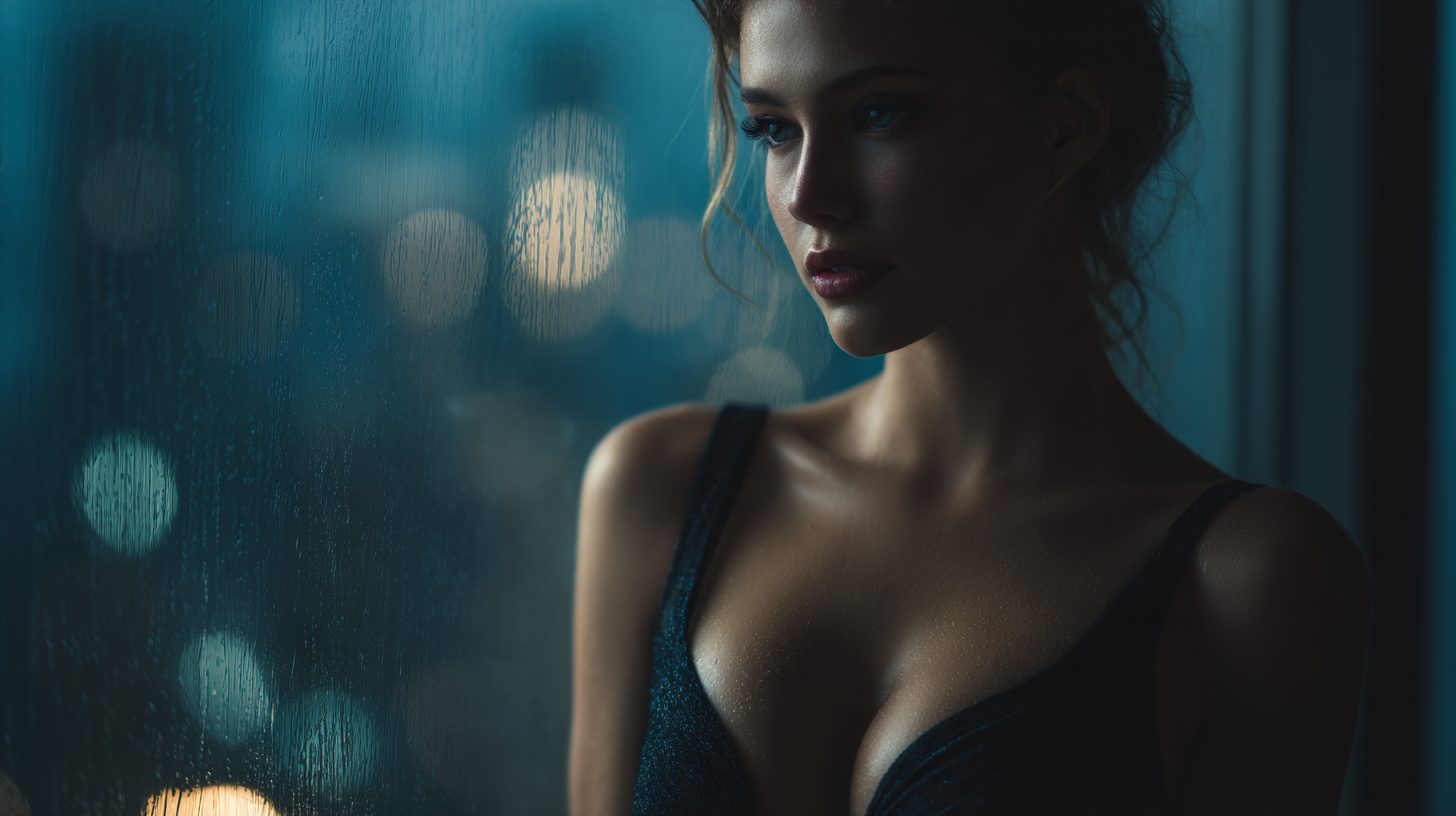
- A woman looking through rain-covered glass.
- A forgotten photograph.
- A lonely dance beneath a spotlight.
- A shadow that looks like someone standing beside her.
- A hand reaching for a reflection.
- A final empty dance floor.
Every image needed to carry emotional weight.
A pretty picture wasn’t enough.
I needed the image to ask a question.
4/9
Step 3: The voice of the missing man
This was where the project became strange.
The visuals showed a woman.
But the voice belonged to a man.
I imagined an older man with a warm, weathered voice.
Not a movie trailer voice.
Not someone announcing the end of the world.
A man sitting in the dark, finally admitting something he should have said years ago.
The opening line became:
“People think loneliness is the absence of another person.
It isn’t.
Loneliness is remembering what it felt like when someone truly saw you.”
That became the heart of the project.
Because the deepest human hunger isn’t always romance.
Sometimes it is recognition.
Someone looking at you and saying:
“I see you.”
Really see you.
Lab note:
I am beginning to notice a pattern in almost everything I create.
The monsters, the heroes, the love stories, the lonely characters…
They are all searching for the same thing.
Connection.
Apparently even my AI-generated nightclub ghosts have attachment issues.
Who knew?
5/9
Step 4: Creating the images
The workflow was the usual beautiful mess.
The AI filmmaking orchestra:
- Midjourney for cinematic still images
- ElevenLabs for the emotional narration
- Google Flow Music for musical exploration
- Kdenlive for editing and assembly
The hardest part was not making images.
AI is very good at making beautiful images.
The hard part was making 20 beautiful images feel like they belong to the same emotional universe.
A woman walking into a nightclub cannot suddenly look like she stepped into a different movie.
The lighting has to match.
The character has to feel consistent.
The emotion has to continue.
This is where the human part of AI filmmaking happens.
The machine can generate.
The artist has to decide.
6/9
Step 5: The editing experiment
The biggest surprise was how much silence mattered.
Normally when I edit, I want movement.
Something happening.
A new image.
A new idea.
But this song fought me.
It wanted patience.
A hand lingering on a photograph.
A person standing by a window.
A room after someone leaves.
The empty moments became the important moments.
The pauses were not gaps.
They were part of the story.
Lab note:
This is probably my biggest lesson from making hundreds of AI videos.
The temptation is always:
“Look what the AI can do!”
More effects.
More motion.
More spectacle.
But emotion usually lives in the opposite direction.
Less.
A single meaningful image can beat twenty impressive ones.
7/9
The creative stack and the cost of making dreams
One of the reasons I love AI filmmaking is that it lets me experiment at a scale that would have been impossible before.
A filmmaker with a traditional budget would need:
- Actors
- Locations
- Lighting crews
- Camera equipment
- Production schedules
I needed:
- Curiosity
- Time
- A computer
- AI technical stack
The hidden cost is not always money.
It is iteration.
The cost of trying something 20 times until the 21st attempt suddenly works.
That is not the case any more. I have made so many AI films that my fallout is less than 1 percent.
That moment is magic.
The happy accident.
The thing I couldn’t have planned.
That is where the alchemy happens.
8/9
The real lesson
This project reminded me of something important:
AI does not replace the artist.
It amplifies the questions the artist is already asking.
The machine did not decide the story was about loneliness.
I did.
The machine did not decide the man needed to say:
“Thank you for seeing me.”
That came from somewhere much more human.
The AI simply gave me new brushes.
A new camera.
A new orchestra.
The emotional core still had to come from somewhere.
The lesson:
The best AI art is not about making something impressive.
It is about making something honest.
Even if the honesty comes from a fictional person dancing alone in an imaginary nightclub.
9/9
TL;DR:
I started with a seductive instrumental track.
I ended with a story about a man who misses the one person who ever truly saw him.
Apparently my creative process is just wandering into the woods with a flashlight and discovering I built a house there.
That sounds about right.
I am still learning this strange new craft.
Every video is an experiment.
Every experiment is a conversation between human imagination and machine possibility.
And sometimes, if I am lucky, something unexpected walks out of the darkness.
Something that feels alive.
That is the magic.
That is the alchemy.
Steve Teare
video alchemist
TerminallyBored.Monster
Palouse, Washington USA