MOREhuman
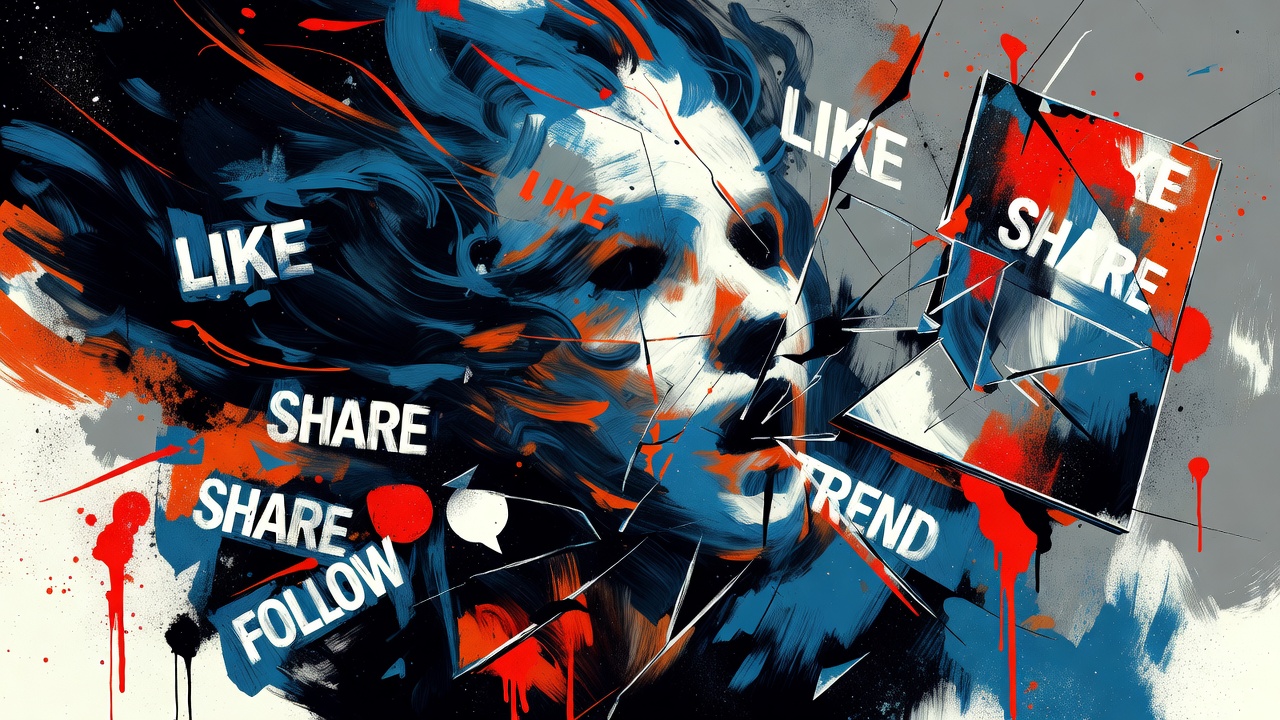
Slopification of Film: Instead of hiring camera crews and human actors, creators are using software to handle the entire production pipeline. For example, platforms can take a text prompt and generate the storyline, script, digital characters, and animated visuals automatically.
Most AI films look technically fine but feel generic and flat.
I start with real human material — email threads, donated poems, personal stories — and use AI as an amplifier instead of a director. The result is short vertical films that carry actual emotional weight, made for under $5 each.
THE OPHELIA FILM COMPANY
See the latest films: https://www.youtube.com/channel/UC6Ap3YMpEClanszy4xeF0qA
How I actually make them
Why Most AI Video Feels Lifeless
AI defaults to safe, cliché, emotionally even output. Heavy prompting usually makes it worse — more rigid and artificial.
I take a different route: I treat the work as found art. I discover what each tool does well, curate the keepers, and let real human psychology and smart audio work carry the feeling.
How I Actually Build These Films
- Start with a Real Human Spark
An email correspondence, a donated poem, a story idea, or a piece of music. I feed the raw material to AI for psychoanalysis — uncovering unspoken emotions, needs, and subtext. Then I iteratively refine lyrics, first-person narration, and script with human judgment guiding every round. - Visuals – Efficient and Constraint-Aware
- Turn the script into a shot list.
- Use a macro to generate detailed Midjourney prompts (with
--creffor continuity). - Select the strongest stills and convert them to ~6-second clips in Grok with minimal prompting — often just “walking, track” or nothing at all. I lean on each model’s sweet spots instead of fighting its limitations.
- Lip sync is kept to a minimum.
- Audio – Where the Real Emotion Lives
This is my strongest lever:
- Split vocal stems from popular songs with LALAL.AI or FADR.AI
- Recombine them with my custom tonal library (1,600+ keyed components: drones, hits, risers, braams, etc.).
- Create intentional clashes in key and tempo for tension and needle-drop energy — without licensing costs.
Sometimes I strip the music entirely so the voice or silence can breathe.
- Final Assembly
Standard editing to sequence the pieces and make them feel coherent. High generation fallout is normal and cheap (relaxed mode + parallel tabs).
The Results
Personal, emotionally charged vertical films that don’t feel like generic AI output.
- Simple poem-to-music-video: a few hours
- Episodic storytelling: a few days
- Average cost: $3.85 per 3-minute piece (total monthly tools ~$80)
The MOREhuman Difference
I don’t try to force AI into perfect control. I start with real human input, work inside the tools’ actual strengths, and focus on curation, audio depth, and tight storytelling under real constraints.
The films feel present because they begin with something human and stay grounded in how the tools actually behave.
Make AI film feel more human.
Start with real material. Work with the machine, not against it.
CTA
Read the production notes (47+ detailed posts) →
This research library chronicles an ongoing artistic rebellion — poetry that grows into stories, and stories that escape into film.
secrets@terminallybored.monster
Palouse, Washington USA
© 2026 Steve Teare