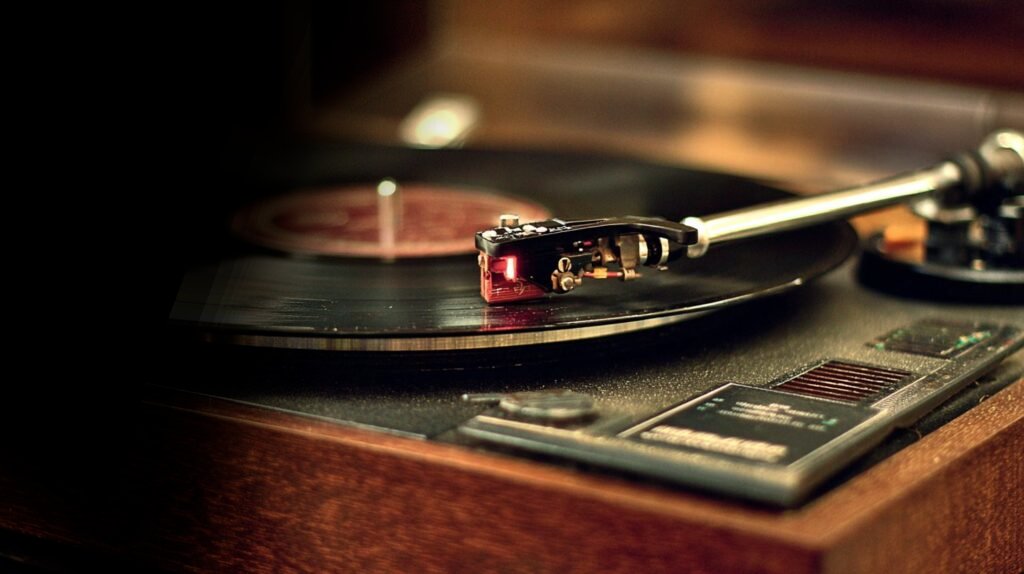
A Pink Floyd Case Study for Short Films
Filmmakers have long used music to place audiences instantly in a story’s emotional world. Think of A Knight’s Tale (2001). The 1970s rock classics like Queen’s “We Will Rock You” made jousting scenes exhilarating. Or The Artful Dodger (2023), where Spiderbait’s 2004 cover of “Black Betty” injected raw rebel energy into an 1850s Australian setting.
These are examples of the needle-drop effect. A single song or style can trigger emotion, nostalgia, and narrative engagement instantly.
I recently tested whether AI-generated music could capture the vibe of early 1970s Pink Floyd, specifically the hypnotic atmosphere of Echoes (1971). The goal wasn’t to copy the song. Instead, I aimed to create a track that felt like a lost Floyd piece. This makes a perfect cinematic needle-drop for short films.
The Psychology Behind Needle Drops
Needle drops work because the brain reacts faster to sound than visuals. Music communicates instantly:
- Time period or style – Analog warmth, tape echo, and plate reverb signal “classic 70s studio.”
- Emotional tone – Harmonic tension, tempo, and timbre cue suspense, romance, or triumph.
- Cultural familiarity – Recognizable riffs or patterns evoke nostalgia.
Examples:
- In The Artful Dodger, Spiderbait’s “Black Betty” hits a dopamine peak during a kissing scene. The high-energy riff and familiarity trigger instant engagement.
- In A Knight’s Tale, Queen’s stadium-rock groove amplifies excitement and anticipation, even in an anachronistic context.
These moments combine emotional resonance, nostalgia, and anachronistic contrast. They make historical or fictional stories feel immediate and relatable.
Case Study: Imitating Pink Floyd with AI
I wanted a track that felt like a lost Floyd composition. Here’s how I approached it:
Step 1: Establish the Needle Drop
- Vinyl crackle and hum in the first 2–5 seconds primes the ear for authenticity.
Step 2: Emulate Period-Specific Production
- Analog tape warmth, plate reverb, and tape echo replicate early 70s studio textures.
Step 3: Use Era-Authentic Instruments
- Strat-style slide guitar, Hammond/Leslie organ, melodic bass, and sparse drums. This signals a “Floyd-like band.”
Step 4: Apply Hypnotic Harmonic Motion
- Slow bass movement beneath a tonal center produces a drifting, oceanic feel.
Step 5: Add a Surreal Middle Section
- Rhythm disappears.
- Textures and echo dominate, creating a dreamlike, psychological space.
- Ideal for cinematic tension or introspection.
Step 6: Layer the Prompt Strategically
- Recording technology → genre → instruments → musical behavior → emotional atmosphere
Step 7: Introduce Imperfections
- Pick clicks, amp hum, and ambient noise make the track feel “lived-in.”
Step 8: AI Prompt Example
Here’s the structured prompt I used:
Atmospheric progressive psychedelic rock recorded with analog tape warmth, plate reverb ambience, guitar through tape echo, Stratocaster slide guitar with Farfisa/Hammond organ through Leslie speaker, warm melodic bass and spacious drums. Slow hypnotic groove with evolving textures and gradual build. Mood: mysterious, cosmic, oceanic, introspective.
Step 9: Evaluate the Result
- Most listeners immediately said, “That sounds like Pink Floyd.”
- The track evoked the same hypnotic, immersive effect as a real Floyd recording.
- Perfect for a cinematic needle-drop moment.
Applying Needle-Drop Principles in Short Films
For AI filmmakers, the impact is clear:
- Immediate emotional engagement – Audiences feel energy, tension, or romance before visuals fully develop.
- Historical or generational bridge – Era-evocative music connects modern viewers to distant or fictional worlds.
- Memorability – Strong needle-drop moments stick in the audience’s mind.
Using AI, filmmakers can produce original tracks that act like cinematic anchors, just as Spiderbait and Queen did in their films.
Conclusion: The Power of AI Needle Drops
This case study shows that AI can do more than fill silence. With careful use of sonic cues, harmonic structure, and surreal textures, AI-generated music can evoke the same psychological responses as familiar tracks.
Whether you want to emulate Pink Floyd’s hypnotic textures, energize a jousting scene with stadium-rock riffs, or modernize a historical setting with a viral rock cover, understanding the psychology behind needle drops is key.
AI filmmakers who think like both composer and psychologist can create moments that feel instantly recognizable, emotionally charged, and narratively potent — the hallmarks of a cinematic needle-drop.
Our preferred $8-per-month vendor for AI music production: https://www.producer.ai/
Steve Teare
video alchemist
Palouse, Washington