“Do you feel understood?”
That was the sentence that detonated the entire project.
Not in a dramatic Hollywood way. More like a tiny crack appearing in reality that suddenly lets light through.
I had lunch with someone recently, and at the end of the conversation she asked me that question. No one has ever asked me that before. Ever.
And the strange thing was… I actually did.
So naturally my brain responded in the healthiest possible way:
I disappeared into AI video generation for several days like a raccoon crawling into an abandoned arcade machine.
This is the way.
2/9
The original idea was surprisingly abstract.
I didn’t want a literal “relationship” video.
I didn’t want actors dramatically staring into each other’s eyes while Coldplay played in the background like a pharmaceutical commercial for emotional availability.
I wanted something stranger.
Something about:
- recognition
- relief
- emotional distance collapsing
- and that bizarre feeling when another mind suddenly matches your internal cadence
At first I thought the entire thing should be liminal nature imagery.
No humans.
No buildings.
No narrative.
Just:
- forests at dusk
- ocean waves
- arctic tundra
- wind moving through grass
- snowfields under fading light
Like nature itself had briefly become conscious of an emotional event.
Which, honestly, sounds ridiculous when I type it out.
But visually?
It worked.
3/9
Step 1: Building the emotional architecture
The first breakthrough wasn’t visual.
It was musical.
I used two separate covers of “Fix You” — one male, one female.
Then I:
- Shifted the male vocal from C# major into D major
- Matched both versions to 71 BPM
- Pulled apart the stems
- Started rebuilding the song almost like emotional DNA editing
The goal was not:
“male singer + female singer.”
The goal was:
two consciousness streams gradually realizing they are sharing the same emotional space.
Yeah. I know how that sounds.
Lab note:
AI filmmaking becomes MUCH more interesting when you stop thinking in terms of “characters” and start thinking in terms of systems interacting.
4/9
Step 2: The liminal nature experiment
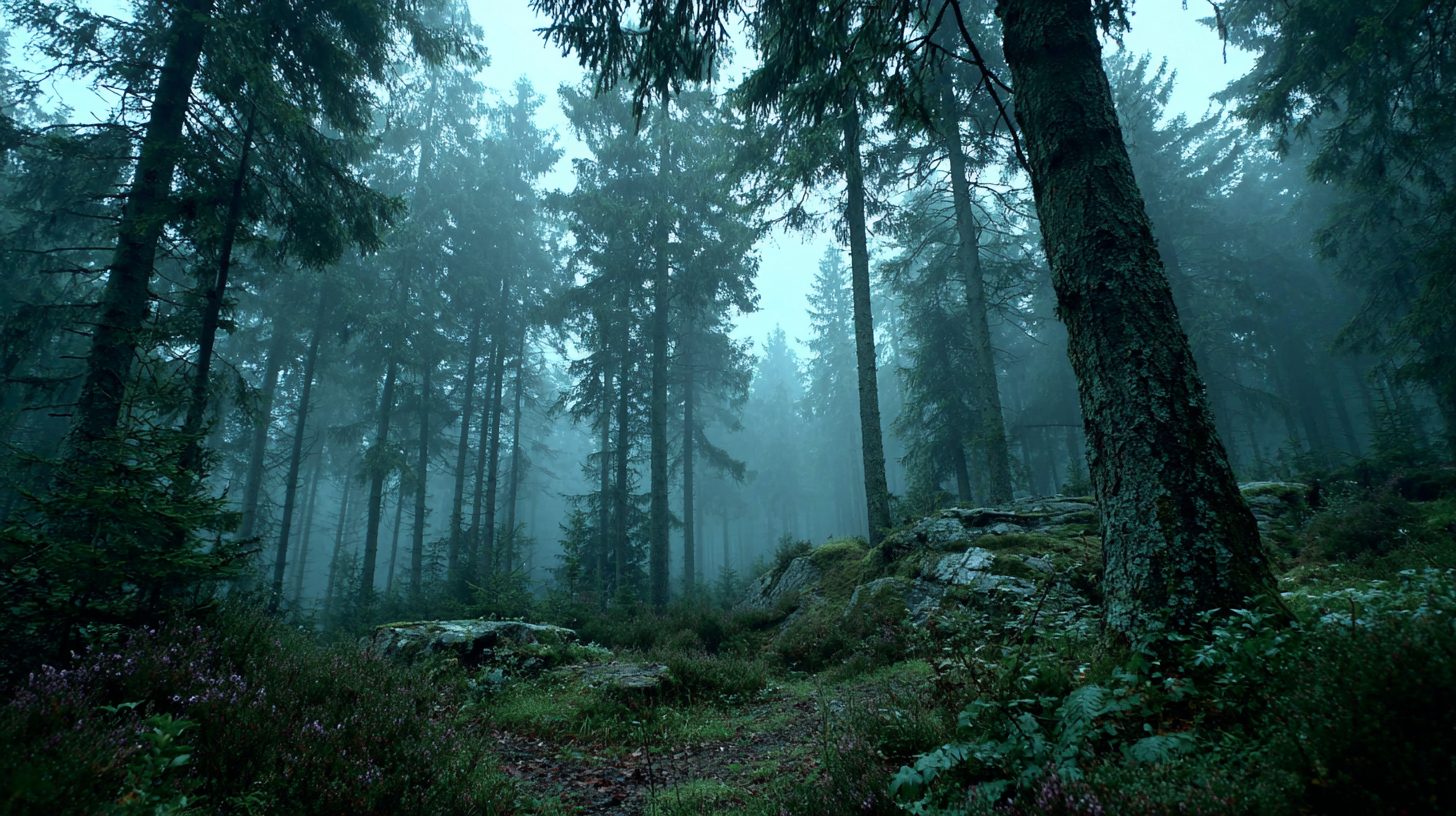
I generated nine environmental shots in Midjourney.
The prompts became very specific:
- cinematic realism
- natural lighting
- dusk gradients
- volumetric haze
- emotional stillness
- no fantasy physics
- no surrealism
- no humans
This part surprised me.
The AI landscapes began feeling less like “backgrounds” and more like emotional pressure systems.
A forest at dusk can somehow feel like a held breath.
An arctic horizon can feel emotionally isolated without showing a single human being.
A shoreline repeating waves can feel like grief trying to regulate itself.
That’s the weird magic of this technology:
you are not filming reality anymore.
You are filming associations.
Watch Video At: [YouTube link]
5/9
Step 3: The moment the project changed
Originally the entire video was going to stay humanless.
Then I tried something experimentally dangerous:
human vulnerability.
I generated six close-up shots using Midjourney and animated them in Grok Imagine.
The prompt was:
“close up, young Caucasian redhead, crying happy tears, man’s hand brushes tears from her cheek”
That phrase “happy tears” turned out to matter enormously.
If the tears looked sad, the project collapsed into loss.
If they looked relieved, the entire emotional meaning changed.
Suddenly the video was no longer about pain.
It became about release.
About finally being emotionally reached.
Lab note:
Tiny wording changes in prompts radically alter emotional interpretation.
“Crying” and “crying happy tears” are not remotely the same visual instruction to an AI model.
6/9
Step 4: The silence experiment
This became my favorite part.
There’s a break in the music.
Everything stops.
No montage.
No emotional crescendo.
No dramatic reveal.
Just silence.
And then:
a sigh.
That sigh may honestly be the emotional center of the entire piece.
Because relief sounds different from sadness.
You can hear it.
After that:
- a couple hugging on a beach
- a close-up in the forest
- a kiss
- and finally the question:
“Do you feel understood?”
He nods.
Smiles.
Cut to waves.
Done.
No speech after that.
Nothing to explain.
Which is important because over-explaining emotional moments is basically the cinematic equivalent of microwaving sushi.
7/9
Tools & creative stack
Here’s the actual production stack used:
- Midjourney – images
Environmental liminal nature stills and emotional close-ups - Grok Imagine – image-to-video
Animation and subtle motion generation - LALAL.AI – Stem separation tools
Vocal extraction and layering - Audacity – Audio pitch shifting + tempo matching
Converting both covers into D major at 71 BPM - Kdenlive – Video editing software
Timing, silence structuring, pacing, transitions
Lab note:
The hardest part of AI filmmaking is no longer image quality.
It’s emotional calibration.
8/9
The real lesson
This project accidentally taught me something uncomfortable.
I think most people are starving for recognition more than attention.
Attention is easy.
Algorithms manufacture it by the metric ton.
Recognition is rarer.
Recognition is:
“I see the shape of your internal world.”
“I can track your emotional logic.”
“I understand the thing beneath the performance.”
That’s what the project became about.
Not fixing someone.
Not rescuing someone.
Not romance in the conventional cinematic sense.
Just:
the emotional exhale that happens when another person genuinely reaches you.
And honestly?
That might be one of the rarest human experiences there is.
9/9
The funniest part is that AI helped me express something deeply human by removing almost all humans from the frame for most of the video.
Forests.
Waves.
Wind.
Snow.
Silence.
Then finally:
a face.
A sigh.
A question.
Maybe that’s the real hidden structure underneath all this AI experimentation.
The tools are not replacing emotional truth.
They’re becoming strange new instruments for locating it.
Or maybe I’m just hallucinating meaning into simulated fog and ocean waves again.
Both can be true.
TL;DR:
I made an AI-assisted cinematic dream about emotional recognition, liminal nature, happy tears, silence, and the question:
“Do you feel understood?”
Unexpectedly, I think the video understood me back.
Steve Teare
video alchemist
TerminallyBored.Monster
Palouse, Washington USA
FOOTNOTES:
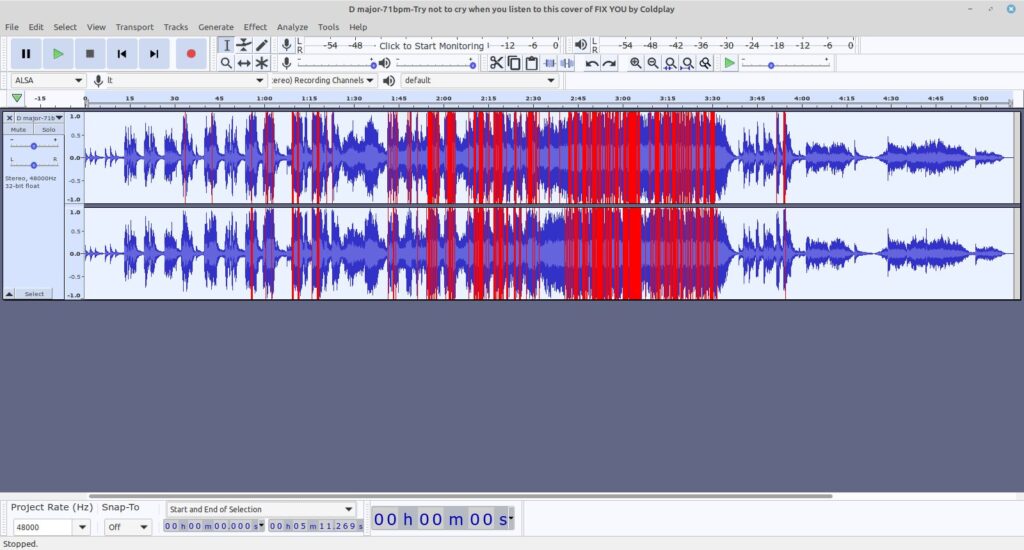
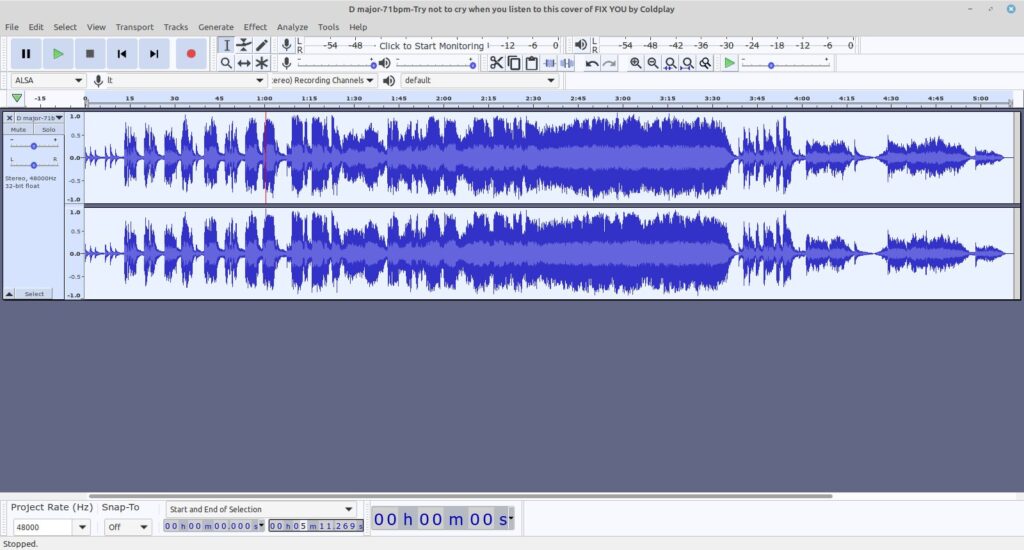
Audacity is a program available for all computer platforms. When you layers stems and sounds, you can often overdrive the audio output. When examined in Audacity, it’s settings expose the over-driven audio as red bands. A few button clicks with the default setting fixes it.