The project started with a song.
Then it became three songs.
Then somehow it turned into a blues rock opera about longing, recognition, and two people inhabiting completely different emotional worlds.
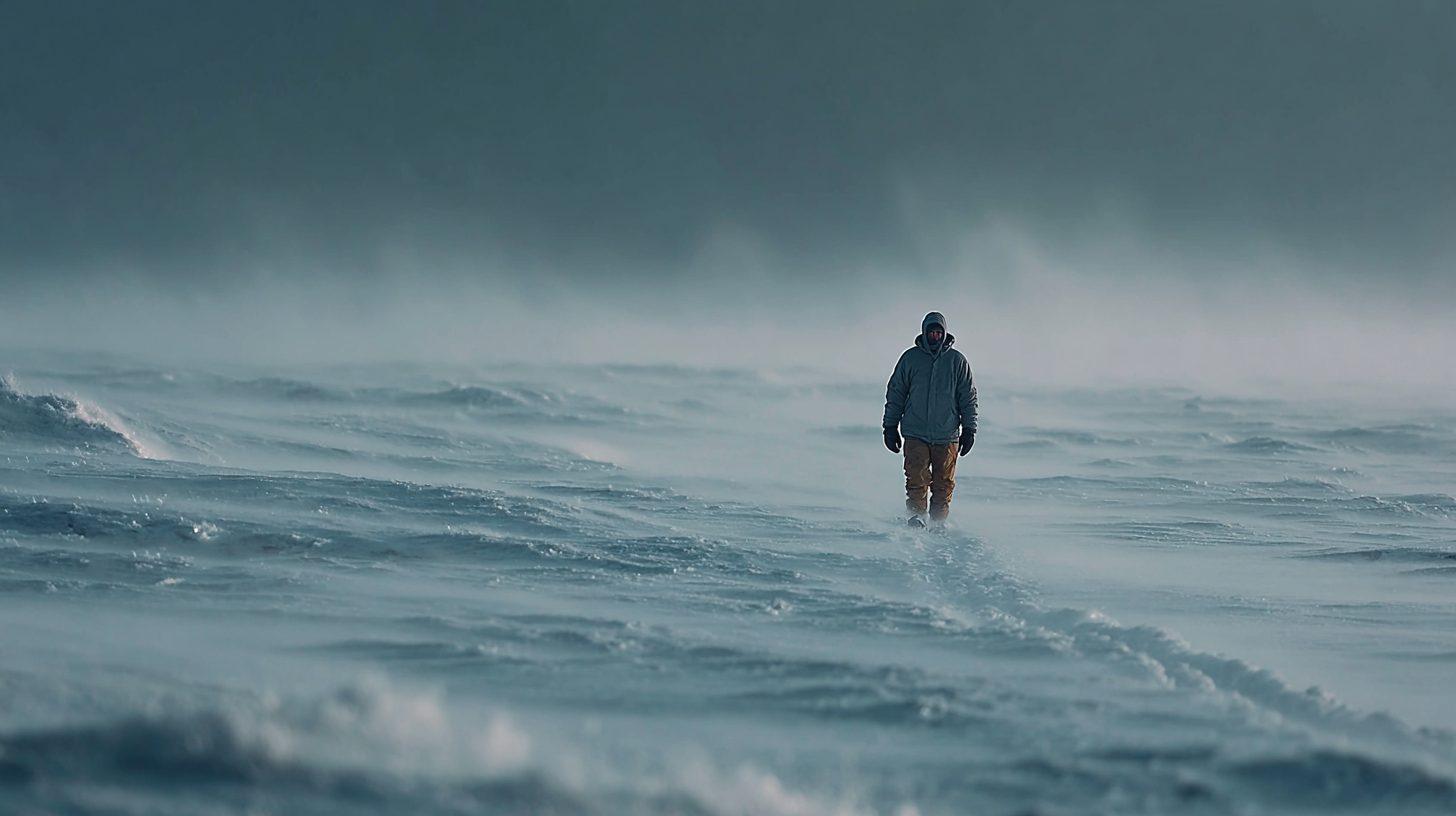
One world was ice.
One world was jungle.
And somewhere beneath both of them was a third place neither could reach alone.
At least that was the theory.
The reality was a little messier.
As usual.
2/9
The opening idea was simple enough.
Act 1 would follow a man wandering through an Arctic landscape.
Act 2 would follow a woman moving through an Amazon jungle.
Act 3 would bring both of them into a shared underground world.
Not a city.
Not a house.
Not a relationship.
Underground.
The subconscious.
The hidden place.
The place where truths live before they become words.
I had the songs.
I had the environments.
I had the visual language.
I thought I was almost done.
I was wrong.
3/9
Step 1: The math attacked me
At first I built a shot list.
Twenty hero shots.
Big cinematic moments.
The kind of shots that make you feel clever when you’re writing them.
The problem?
The opera runs almost ten minutes.
My clips are six seconds long.
Twenty shots sounds like a lot until you do the arithmetic.
Then suddenly you discover you’ve built a beautiful visual structure that only lasts a few minutes.
Lab note:
Creative projects often fail because the concept is weak.
This one failed because I forgot how division works.
4/9
Step 2: Discovering the missing layer
My first instinct was obvious.
Generate more video.
Lots more video.
Then something interesting happened.
The mistake revealed a better solution.
Instead of creating nearly one hundred AI-generated video clips, I started building a second visual layer.
A moving foundation.
A visual river beneath the hero moments.
That’s where the B-roll emerged.
Not as filler.
Not as decoration.
As emotional architecture.
Ice became:
• drifting snow
• frozen rivers
• footprints disappearing
• frost crystals
• breath in cold air
Jungle became:
• water droplets
• roots
• vines
• reflected light
• layers of living complexity
Underground became:
• tunnels
• shadows
• puddles
• fluorescent lights
• distance and anticipation
Suddenly the project had a heartbeat.
5/9
Step 3: Turning still images into motion
This was the breakthrough.
Instead of forcing AI video to do all the work, I could let still images carry much of the emotional load.
The plan became:
- Generate cinematic stills in Midjourney
- Use PhotoFilmStrip to create slow Ken Burns motion
- Build a continuous moving visual bed
- Place hero video clips on top during emotional peaks
This approach solves several problems at once.
The images stay sharp.
The movement remains intentional.
The visual style stays consistent.
And I don’t have to babysit dozens of AI video generations that suddenly decide gravity is optional.
6/9
Step 4: The worlds became characters
The more I worked on the imagery, the more I realized something.
The environments were no longer backgrounds.
They were participants.
The Arctic isn’t simply cold.
It’s exposure.
Distance.
Recognition.
The feeling of finally seeing something you’ve searched for your entire life.
The jungle isn’t merely alive.
It’s containment.
Complexity.
A rich inner world with boundaries and structure.
And the underground world?
That’s where things get interesting.
It’s neither ice nor jungle.
Neither masculine nor feminine.
Neither conscious nor unconscious.
It’s the place where two truths can occupy the same space.
Without necessarily becoming one thing.
7/9
Tools & Creative Stack
Music
• Original blues rock opera
• Three songs in E minor
• Cello drone transitions between acts
Visual Development
• ChatGPT
• Midjourney
• Grok image-to-video
Editing
• PhotoFilmStrip
• Kdenlive
Creative Direction
• Human imagination
• Excessive stubbornness
• A willingness to chase strange ideas farther than is probably reasonable
Lab note:
The longer I do this, the less interested I become in asking AI to create finished work.
I prefer directing an orchestra.
The magic isn’t in the instrument.
The magic is in deciding what should happen next.
8/9
The real lesson
The best part of this project wasn’t the original idea.
It was the mistake.
I genuinely thought I had enough footage planned.
I didn’t.
That failure forced me to rethink the entire visual structure.
The result is stronger than the original concept.
The B-roll isn’t supporting the story.
It is the story.
The hero clips are simply moments when the emotional weather becomes visible.
That’s a completely different way of thinking about visual narrative.
And a much better one.
9/9
TL;DR
I set out to make a blues rock opera.
I accidentally discovered I needed nearly one hundred shots.
That problem led to a layered visual system built from Midjourney stills, Ken Burns motion, AI video inserts, Arctic isolation, Amazon density, and underground tension.
In other words:
I got the math wrong.
The project got better.
Funny how often creativity works that way.
The happy accidents are rarely accidents.
They’re usually hidden structure waiting for permission to reveal itself.
As the master alchemist directing this particular AI orchestra, I’ve learned that improvisation often looks chaotic right up until the moment it suddenly makes perfect sense.
Steve Teare
video alchemist
TerminallyBored.Monster
Palouse, Washington USA