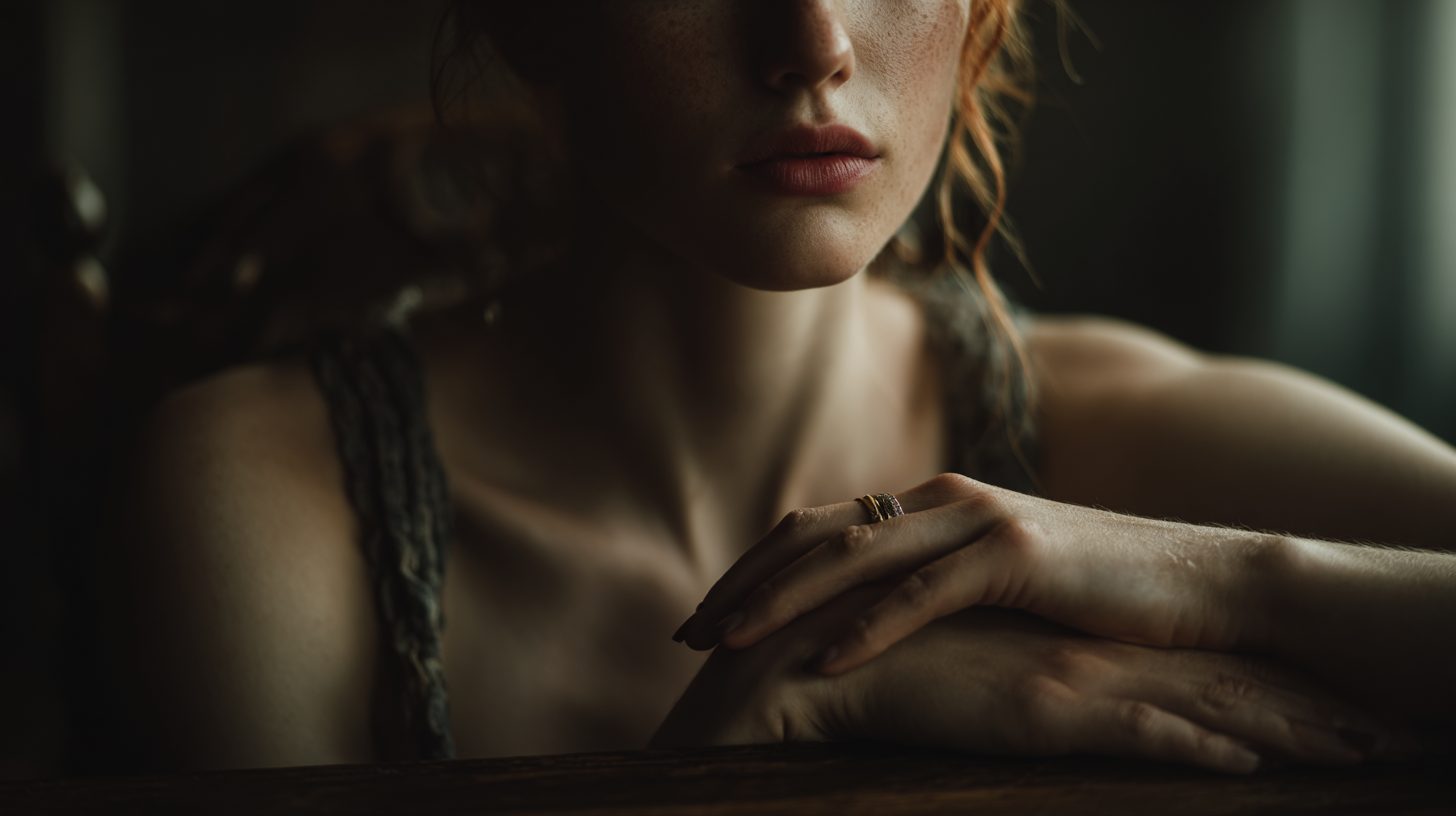
There’s a strange moment that happens when a project stops feeling like “a video” and starts feeling like a ritual.
Not in a mystical way. Not in a dramatic way.
More like: I realized I wasn’t arranging shots anymore. I was arranging states.
Tonight did that to me.
It started as a simple idea—an atmospheric new wave ballad with a female vocal, something reflective, something late-night and slightly bruised around the edges.
And then it quietly became something else.
A 2:44 minute attempt to turn distance, aging, and connection into a controlled transformation process.
A small alchemical experiment disguised as a music video.
2/10
The Concept That Wouldn’t Stay Small
At first, I thought I was just building visuals for a track called Tonight.
Simple enough:
Ophelia, my recurring voice-frame, moving through a quiet night world.
But every time I tried to “illustrate” the lyrics, the images felt too literal.
Too human.
Too clean.
So I did something slightly dangerous (and slightly fun).
I stopped trying to show a story.
And started trying to show a process instead.
3/10
Step 1: The Song as a Phase Change
The song itself is only 2:44 long, but it behaves like a longer internal experience.
So I mapped it not to narrative beats, but to alchemical stages:
- Nigredo – dissolution
- Albedo – reflection
- Mercurius – instability
- Rubedo – integration
Lab note: This is where things got interesting. Once I stopped thinking in “scenes” and started thinking in “states,” the visuals stopped fighting me.
They started obeying the logic of transformation instead of the logic of storytelling.
4/10
Step 2: Ophelia Becomes a Constant, Not a Character
I used a single Midjourney reference image of Ophelia as a locked anchor:
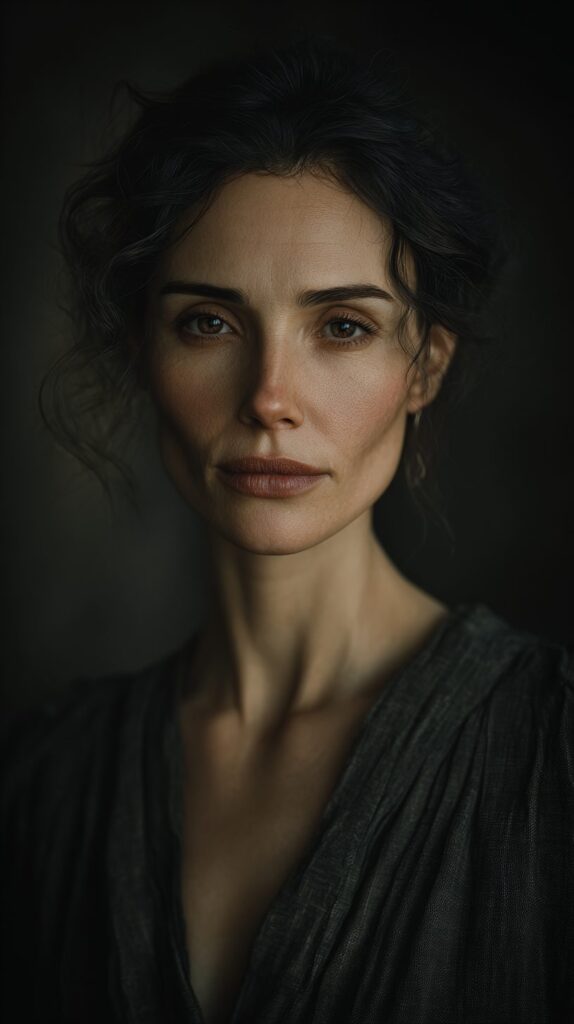
She is not “acting” in this project.
She is the invariant.
Everything else changes:
light, temperature, reflection, object behavior, temporal stability.
But she remains emotionally consistent.
Quiet.
Observant.
Almost absent in her own presence.
Lab note: This is the opposite of performance-based video. She doesn’t express emotion. The environment expresses it around her.
5/10
Step 3: The Shot Architecture (27 shots, 6 seconds each)
The entire video is built on a rigid constraint:
27 shots total
6 seconds per shot
No narrative escalation in the traditional sense
Instead:
- Phase I: dissolution of stability
- Phase II: reflection and emergence
- Phase III: temporal instability
- Phase IV: integration
This constraint did something unexpected.
It removed “decision fatigue.”
I stopped asking what should happen next.
And started asking what state the system is in.
6/10
Lab note: The Strange Power of Small Distortions
The most effective visual language in this project wasn’t dramatic imagery.
It was tiny violations of expectation:
- water rippling without touch
- reflections slightly out of sync
- chairs subtly repositioned between cuts
- shadows moving without source
- objects behaving like they remember something I don’t
None of this is supernatural in a literal sense.
It’s perceptual instability.
The brain starts trying to “correct” reality.
And eventually gives up.
That moment is where the emotion enters.
7/10
Step 4: The Alchemy Layer
Each phase of the video maps loosely to classical alchemy:
Nigredo:
Dark room, dust, ink in water, separation, silence.
Albedo:
Light leaks, reflective surfaces, fragile clarity.
Mercurius:
Instability, mismatch, temporal drift.
Rubedo:
Warm stabilization, objects settling into agreement with themselves.
Lab note: I didn’t plan for this to feel philosophical. It just emerged because transformation is one of the only frameworks that actually holds emotional ambiguity without collapsing it into narrative explanation.
8/10
Tools & Creative Stack
Midjourney (character + shot generation)
Flow Music (final audio structure and timing)
Midbot Chrome automation (batch generation pipeline)
Kdenlive (assembly and timing)
Reference image system for Ophelia consistency
Personal prompt engineering layer (quiet, no talking, subtle motion only, slow cinematic tracking shot)
Budget note: Mostly time, not money. The real cost is iteration cycles.
9/10
Discovery / Takeaway
Here’s the thing I didn’t expect:
When you remove narrative pressure from a project like this, emotion doesn’t disappear.
It reorganizes itself.
Instead of:
“What happens to her?”
You get:
“What state is the world in right now?”
And somehow that question feels closer to how memory actually works than story does.
Key lesson:
The most powerful AI visuals I’ve made recently aren’t stories.
They’re controlled inconsistencies.
Small, repeatable deviations that make reality feel slightly self-aware.
TL;DR:
Stop telling the system what to show. Start telling it what phase reality is in.
10/10
Closing Reflection
Tonight ended up being less about making a music video and more about building a quiet ritual out of digital fragments.
Ophelia holds it together, not by performing emotion, but by staying still long enough for everything else to reveal itself.
There’s something comforting in that.
Not resolution.
Not meaning.
Just transition, held in place long enough to be seen.
And maybe that’s all any of this ever is.
Steve Teare
video alchemist
TerminallyBored.Monster
Palouse, Washington USA