Sometimes a project chooses you.
This one certainly did.
It began with a song about parenting. Beautiful lyrics. Honest lyrics. The kind that don’t need fireworks because they already carry enough emotional weight.
As I listened, I couldn’t stop imagining someone I know.
Stephanie.
Not because the song was written for her. It wasn’t.
But because every line reminded me of the quiet persistence of a mother raising her son, Logan. Not perfection. Just showing up. Again and again.
That’s when the idea refused to leave.
What if I reimagined the song as a short cinematic film?
Not a music video.
A story.
2/9
The challenge appeared almost immediately.
The lyrics, read as narration by an intelligent forty-something female voice, came to two minutes and fourteen seconds.
The finished film needed to stay under three minutes.
That left less than a minute to tell an entirely different story.
From Logan’s perspective.
Years into the future.
Lab note:
Creative limitations are wonderful editors.
If I had three more minutes, I probably would have made a weaker film.
Forty-five seconds forced me to ask one question:
What would matter most after thirty years?
Not every memory.
Just the one realization.
3/9
Instead of repeating the mother’s message, I wanted the son’s narration to answer it.
She spends the film loving.
He spends the ending understanding.
That tiny shift changes everything.
The audience hears unconditional love first.
Only later do they discover what that love produced.
My first draft was…
Well…
A little syrupy.
I read it out loud and immediately thought,
“Steve… put the maple syrup back in the cupboard.”
So I deleted the speeches.
I deleted the grand declarations.
Instead, I started looking for quieter truths.
The son doesn’t remember perfect parenting.
He remembers persistence.
He doesn’t say his mother never made mistakes.
He realizes she kept showing up anyway.
That felt true.
And truth usually beats poetry.
At least for me.
4/9
Step 1: Casting people who don’t exist
One of my favorite things about AI filmmaking is that casting no longer begins with actors.
It begins with imagination.
The mother needed to feel authentic. Mid-forties. Dark hair. Slim but healthy. Attractive without looking like she belonged on the cover of a fashion magazine.
She had to look like someone who had spent years raising a son instead of spending years chasing perfection.
Then came the harder challenge.
Her grown son.
Not just another handsome guy.
He had to look like her.
Same eyes.
Same skin tone.
The same quiet kindness hidden in his expression.
Genetics became part of the art direction.
Lab note:
When AI gets family resemblance right, the audience never notices.
When it gets it wrong, they notice immediately. It failed. Oh, well.
5/9
Step 2: Finding the voices
The mother’s words had already been recorded by a wonderfully intelligent female voice. The words were those of “You’ll be in my heart” by Phil Colin’s for his daughter.
That became the emotional foundation of the entire film.
The son was different.
He couldn’t sound like an actor.
He couldn’t sound inspirational.
He couldn’t sound as though he were delivering a commencement speech.
He had to sound like a man in his mid-thirties who had finally figured something out.
That’s a surprisingly narrow target.
I spent more time writing the voice prompt than writing some of the narration itself.
Not because AI voices aren’t capable…
Because subtle sincerity is incredibly difficult to describe.
Lab note:
The best voice direction often describes who someone is rather than how they should sound.
6/9
Step 3: Six-second stories
Every visual became its own tiny film.
Six seconds.
That’s all.
One clip might be a mother waiting in the school pickup line.
Another, quietly folding laundry before sunrise.
Another, sitting alone at the kitchen table surrounded by bills.
None of those moments are dramatic.
That’s exactly why they matter.
Real parenting rarely happens in grand cinematic moments.
It happens while nobody is watching.
For the son’s story, I shifted the visual language.
He walks.
He pauses.
He hesitates before making a phone call.
He helps a stranger.
Small moments.
Ordinary moments.
Moments where you suddenly recognize that you’re becoming a little more like your parents than you ever imagined.
Then there was one more layer.
Elephants.
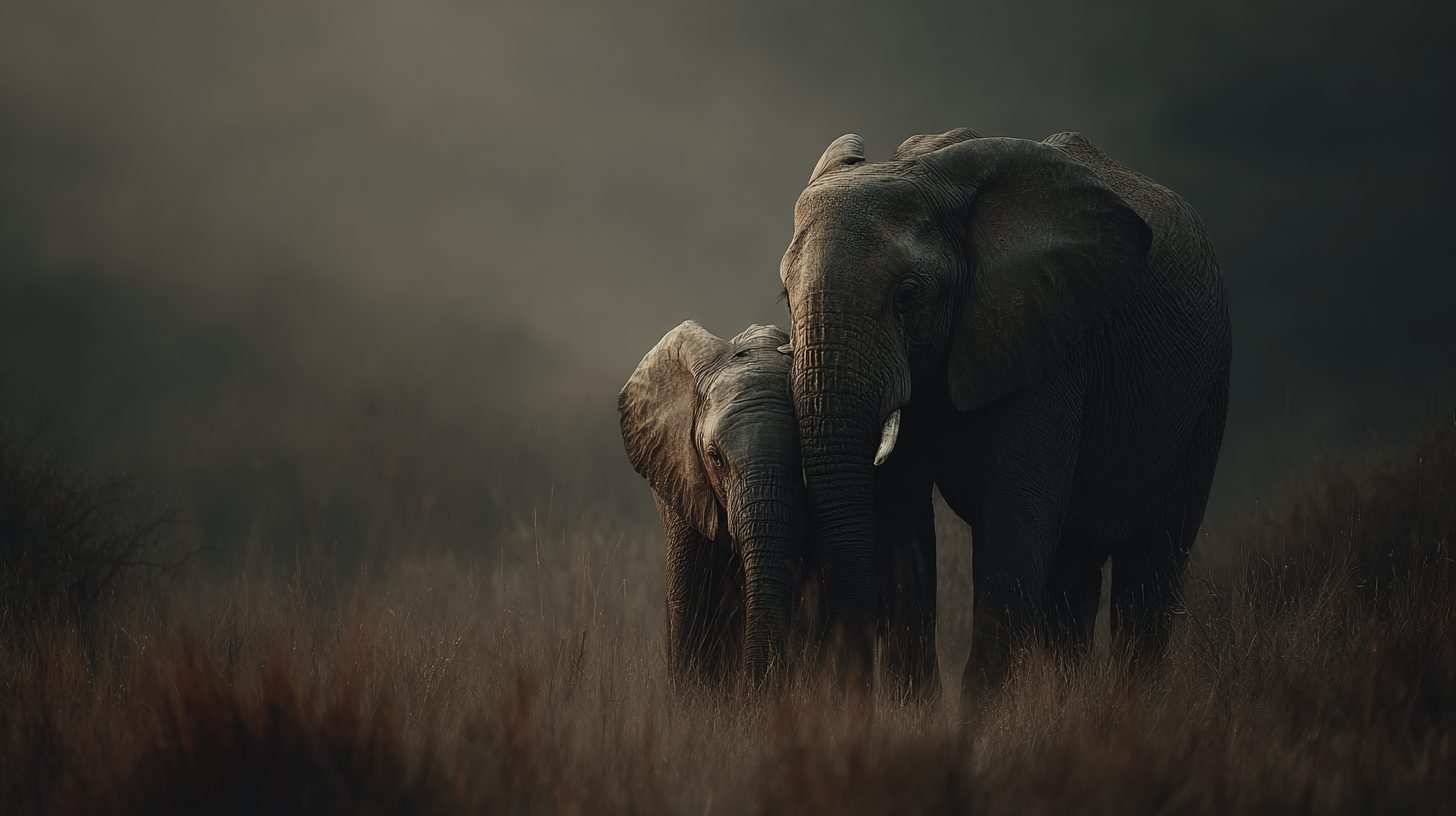
A mother elephant and her calf became a visual metaphor woven throughout the film.
No dialogue.
No explanation.
Just quiet reminders that the instinct to protect, guide, and patiently teach didn’t begin with us.
It has always been there.
Long before cameras.
Long before songs.
Long before AI.
Sometimes the oldest stories are the newest ones, simply because we’ve found another way to tell them.
7/9
Step 4: Conducting the AI orchestra
By this point, I wasn’t just making a film.
I was conducting an orchestra of AI.
Except my musicians weren’t holding violins.
They were algorithms.
Each one had a different personality.
Midjourney became my casting director.
AI video tools (Grok Imagine) became my cinematographer.
ChatGPT became my writing partner… although, to be fair, we occasionally argued.
More than once I asked for a Midjourney prompt.
More than once it enthusiastically created an ChatGPT image instead.
Not exactly what I had in mind. That “image” means on free services you will be put on hold for hours. You blew your allotment of free credits.
Lab note:
Working with AI is less like programming and more like collaborating with an lzy teenager who’s brilliant, creative, and occasionally wanders into the wrong room.
You don’t get frustrated.
You redirect.
The conversation is part of the workflow.
Tools used
• ChatGPT – story development, narration refinement, prompt engineering
• Midjourney – consistent character design and reference imagery
• Grok imagine – AI video generation – six-second cinematic clips
• ElevenLabs – voice creation and refinement
• Kdenlive – editing, pacing, transitions, and final assembly
Budget
Still being calculated. But less than $5.
That’s one of the fascinating things about AI filmmaking.
Sometimes your biggest expense isn’t software.
It’s curiosity.
One more prompt.
One more variation.
One more experiment.
One more “I wonder what would happen if…”
8/9
The real lesson
I started this project thinking it was about parenting.
Somewhere along the way I realized it was really about legacy.
Not the kind engraved on monuments.
The kind that quietly appears years later in another person’s decisions.
The way they treat strangers.
The patience they didn’t know they inherited.
The questions they ask themselves before making a difficult choice.
Those things don’t announce themselves.
They simply become part of who someone is.
AI helped me visualize that invisible inheritance.
Not because the technology understands love.
It doesn’t.
But because it gave me enough creative freedom to focus on the human parts.
That’s the irony I keep running into.
The more capable the technology becomes…
the more interested I become in ordinary people.
Not superheroes.
Not celebrities.
Just mothers making coffee before sunrise.
Adult sons finally understanding.
Quiet moments that would never make the evening news but somehow define entire lives.
9/9
TL;DR
A parenting song became a three-minute cinematic story.
The mother tells us what love feels like while she’s living it.
The son tells us what that love meant decades later.
Everything else—the prompts, the software, the renders, the revisions, the happy accidents—exists to support that single emotional arc.
If this project reminded me of anything, it’s that creativity isn’t about replacing human experience with artificial intelligence.
It’s about using artificial intelligence to illuminate human experience a little more clearly.
That’s a collaboration I’ll happily keep showing up for.
Steve Teare
video alchemist
TerminallyBored.Monster
Palouse, Washington USA