The first line of the song was simple:
“Quiet proof that you were here.”
That was the whole idea.
Not a grand love story. Not a dramatic breakup. Not two people running through a field in slow motion while a Hollywood orchestra swells in the background.
Just a moment.
Someone enters your life. Something wakes up inside you. Then life keeps moving.
And somehow, afterward, the world looks slightly different.
That is the feeling I wanted to capture.
2/9
The accidental birth of a song
This project started with a lyric from my friend Tember.
The original emotion was incredibly honest:
“I feel seventeen again.”
That line grabbed me.
Not because it was about being young. It was about that rare moment when something or someone reminds you that you are still capable of wonder.
At my age, those moments are precious.
I have enough life experience to know that not every beautiful thing is meant to stay forever.
Sometimes the gift is simply that it happened.
Lab note:
This is where AI surprised me.
I started thinking I was going to make a happy, gentle indie song.
The AI disagreed.
The first versions were too bright. Too cheerful. Too much “sunshine and coffee commercial.”
The song wanted something else.
It wanted a little ache.
3/9
Step 1: Discovering the emotional key
The first major breakthrough was musical.
The happy version was in F major.
It was pleasant.
It was also wrong.
Then I tried D♯ minor.
Suddenly, the song had a shadow.
Not sadness.
Depth.
The difference was subtle:
Major said:
“Something wonderful happened.”
Minor said:
“Something wonderful happened, and I know I cannot hold onto it.”
That was the song.
Lab note:
Sometimes the AI is not just generating content.
Sometimes it is revealing the structure that was already hiding underneath.
I was trying to tell the AI what emotion to create.
The AI was basically saying:
“Steve, you are misunderstanding your own song.”
Annoying.
Also accurate.
4/9
Step 2: Finding the voice
The early vocals were too high.
Beautiful, but wrong.
The song did not need a young pop soprano.
It needed someone who sounded like they had lived a little.
The final direction became:
Warm alto female vocal.
Husky low register.
Velvet-like tone.
Intimate.
Almost like someone singing quietly across a kitchen table instead of performing on a stage.
The music prompt became:
“deeply intimate indie soul, warm alto female vocal, raspy low register, velvet-like vocals, D# minor key, gentle fingerpicked acoustic guitar, haunting cello, subtle synth textures, warm analog production, bittersweet, nostalgic, quietly hopeful”
Lab note:
The funny thing about AI music is that adjectives matter.
A single word can completely change the emotional universe.
“Beautiful” creates one thing.
“Fragile” creates another.
“Haunting” creates another.
It is less like programming and more like directing an actor.
5/9
Step 3: The lyric surgery
This was probably the hardest part.
The first AI rewrite was actually pretty good.
Almost too good.
It polished away some of the human awkwardness.
And that is dangerous.
Perfect lyrics are often emotionally empty.
The goal was not to make the words smarter.
The goal was to preserve the feeling.
The central idea became:
Quiet proof.
The evidence that something real happened.
A lipstick mark.
A memory.
A smile burned into your mind.
A moment you cannot keep, but you can carry.
The final bridge captured the whole idea:
Maybe love is open hands,
Not holding on too tight.
The beauty isn’t keeping you,
It’s knowing you were in my life.
Lab note:
This is where I had to stop myself.
There is a point of diminishing returns.
After enough editing, you are no longer improving the song.
You are just moving commas around while the emotional life slowly leaves the room.
Sometimes the artist’s job is not to perfect.
It is to recognize when the thing is alive.
6/9
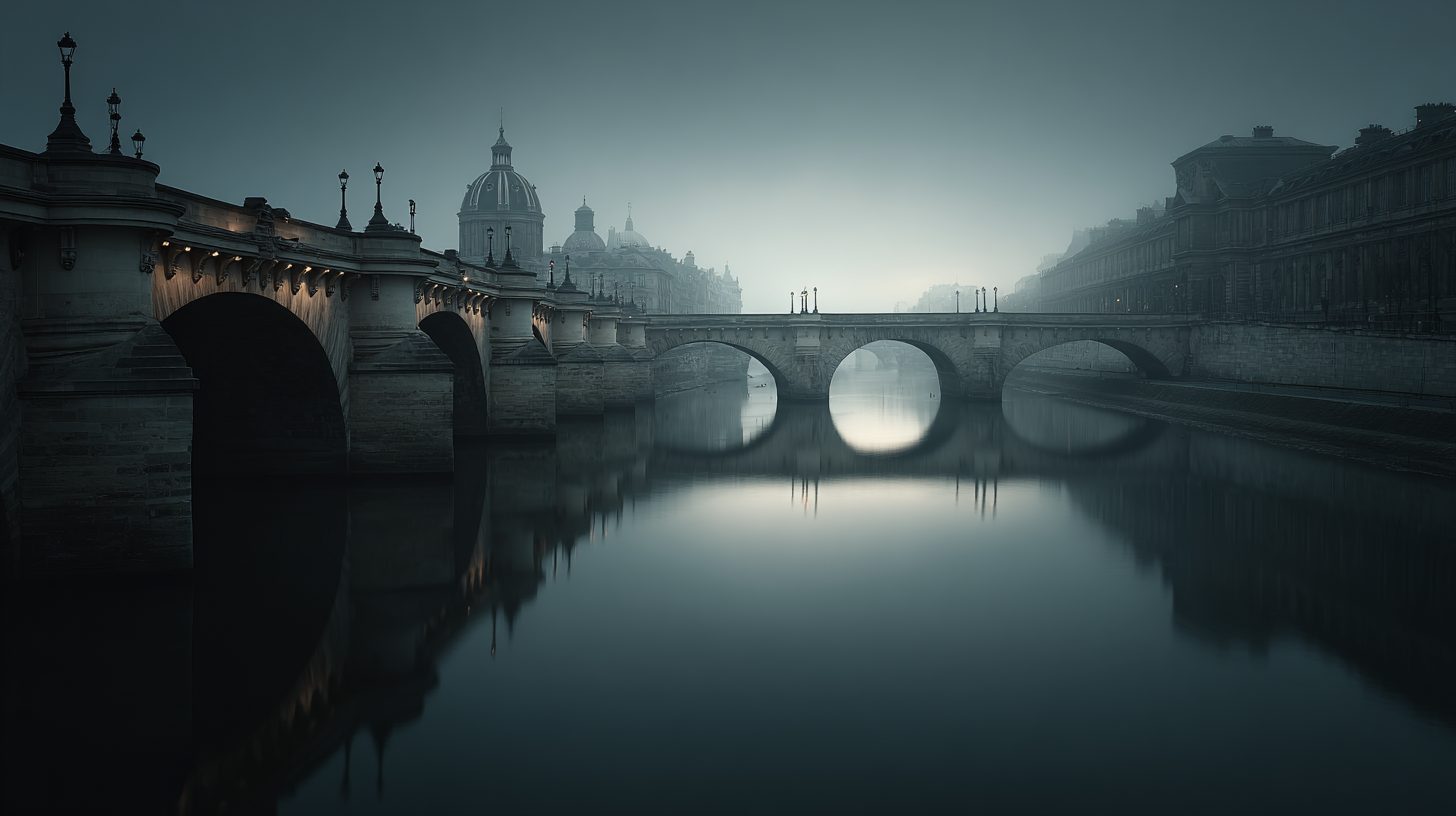
Step 4: Moving from a normal music video to 1960s Paris
The first video concept was too ordinary.
A person walking through fields.
A person looking out windows.
A person remembering someone.
It worked.
But it felt like every other AI music video.
So I moved the entire story.
Paris.
1960s.
French New Wave.
Suddenly the song had a world.
The video became about traces:
A handwritten letter.
A coffee cup.
A train ticket.
A photograph.
An empty chair.
Not showing the relationship.
Showing the evidence.
The quiet proof.
The inspiration was not a traditional romance.
It was the feeling of someone who changes your life simply by being there.
7/9
Step 5: Building the visual world with Midjourney
The challenge with AI video is continuity.
The AI does not really know that yesterday’s person is today’s person.
It has no emotional memory.
So I focused less on character continuity and more on atmosphere continuity.
Every image needed the same DNA:
1960s Paris.
French New Wave cinema.
Natural lighting.
Black-and-white film.
Subtle sepia warmth.
35mm photography.
Human moments.
The prompts were not trying to create movie stars.
They were trying to create memories.
Lab note:
This is where the limitations become strangely useful.
Because AI cannot perfectly remember a character, I started thinking less like a filmmaker casting actors and more like a painter creating impressions.
The limitation became a style.
8/9
Tools & creative stack
The final pipeline:
• ChatGPT — lyric development, emotional analysis, prompt engineering
• Music Flow AI — song generation and arrangement experiments
• Midjourney — cinematic still generation
• Grok Imagine – AI image-to-video tools — motion and atmosphere
• Kdenlive — editing, timing, and final assembly
The cost? Almost, nothing.
Honestly, that is still the weird part about AI filmmaking.
The software cost is often not the biggest expense.
The real cost is attention.
Hundreds of small decisions.
Trying versions.
Throwing away things that almost work.
Finding the one that feels alive.
9/9
The real lesson
The biggest discovery from “Quiet Proof” was not about AI.
It was about listening.
I started this project trying to create a happy song.
The song told me it was bittersweet.
I started trying to make a romance.
The story became about gratitude.
I started trying to create perfect images.
The imperfections became part of the emotion.
That is the strange partnership between humans and AI.
The AI is not the artist.
It is not the storyteller.
It is an incredibly strange instrument.
Sometimes it plays exactly what you ask.
Sometimes it plays something you did not know you were trying to say.
And occasionally…
occasionally…
it gives you quiet proof that there was something worth creating.
TL;DR:
I thought I was making a love song.
I ended up making a song about appreciating the moments that change us.
The AI did not replace the creative process.
It made the process stranger.
And much more interesting.
Steve Teare
video alchemist
TerminallyBored.Monster
Palouse, Washington USA