Not a script.
Not a storyboard.
Not even a plan.
Just a single image I stumbled across in the Midjourney library.
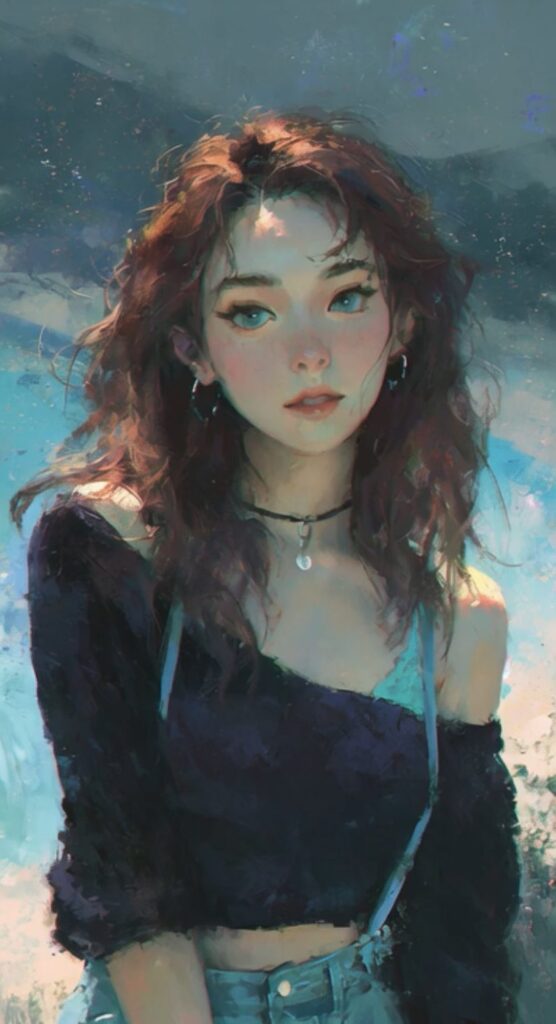
Something about her expression made me stop scrolling. She wasn’t smiling. She wasn’t sad. She simply looked… present. Like she knew something I didn’t.
I’ve learned to trust those moments.
Sometimes the image already knows where it wants to go. My job is simply to get out of the way.
2/9
I didn’t write Recognition.
At least, not in the traditional sense.
The dialogue emerged one line at a time while I was building the project. John would say something. Jane would answer. I’d laugh, type another line, generate another clip, and see where the conversation wanted to go next.
It felt less like writing and more like improvisational theater with two digital actors.
The ending surprised me.
“May I give you a kiss?”
“How dare you?”
She kisses him.
I never saw that coming until it happened. I makes me laugh every time I see it.
Lab note:
Some of my favorite stories don’t begin with an outline. They begin with curiosity.
3/9
The production process turned into its own experiment.
Normally, every shot starts from a fresh image.
This time I wondered…
What if every new scene inherited something from the previous one?
So after Grok generated a six-second video clip, I captured the final frame.
That frame became the starting image for the next animation.
Then I repeated the process.
Again.
And again.
The result was surprisingly organic. Tiny details survived from shot to shot. Facial expressions evolved instead of resetting. Hair shifted naturally. Lighting drifted just enough to feel alive.
Instead of rebuilding a character sixteen different times, I allowed her to become herself.
Lab note:
Continuity isn’t always something you engineer.
Sometimes it’s something you preserve.
4/9
The workflow looked something like this:
- Find a compelling Midjourney image.
- Invent the next line of dialogue.
- Generate a six-second Grok image-to-video clip with lip sync.
- Capture the final frame.
- Feed that frame back into Grok.
- Repeat until the conversation felt complete.
It wasn’t efficient.
It wasn’t automated.
It certainly wasn’t predictable.
It was closer to jazz.
Every note depended on the one that came before it.
5/9
Then something unexpected happened.
After the dialogue was finished, I realized the story wasn’t.
There was still room for another ninety seconds.
Instead of extending the conversation, I wrote a narration about recognition itself.
Not admiration.
Recognition.
There’s a difference.
We spend so much of our lives trying to decide who is ordinary and who is special.
We look at names, appearances, first impressions.
We make quick judgments.
But sometimes, someone comes along who sees past all of that.
Someone who notices the little things.
The creativity.
The intelligence.
The spark.
That narration became the emotional center of the project.
The kiss was no longer the ending.
Recognition was.
6/9
The visuals for the narration needed a completely different language.
I didn’t want people walking through parks.
Or hands touching.
Or butterflies escaping cages.
You’ve seen those images a thousand times.
Instead I built visual metaphors.
A room filled with antique radios.
One radio spilling tiny stars instead of sound.
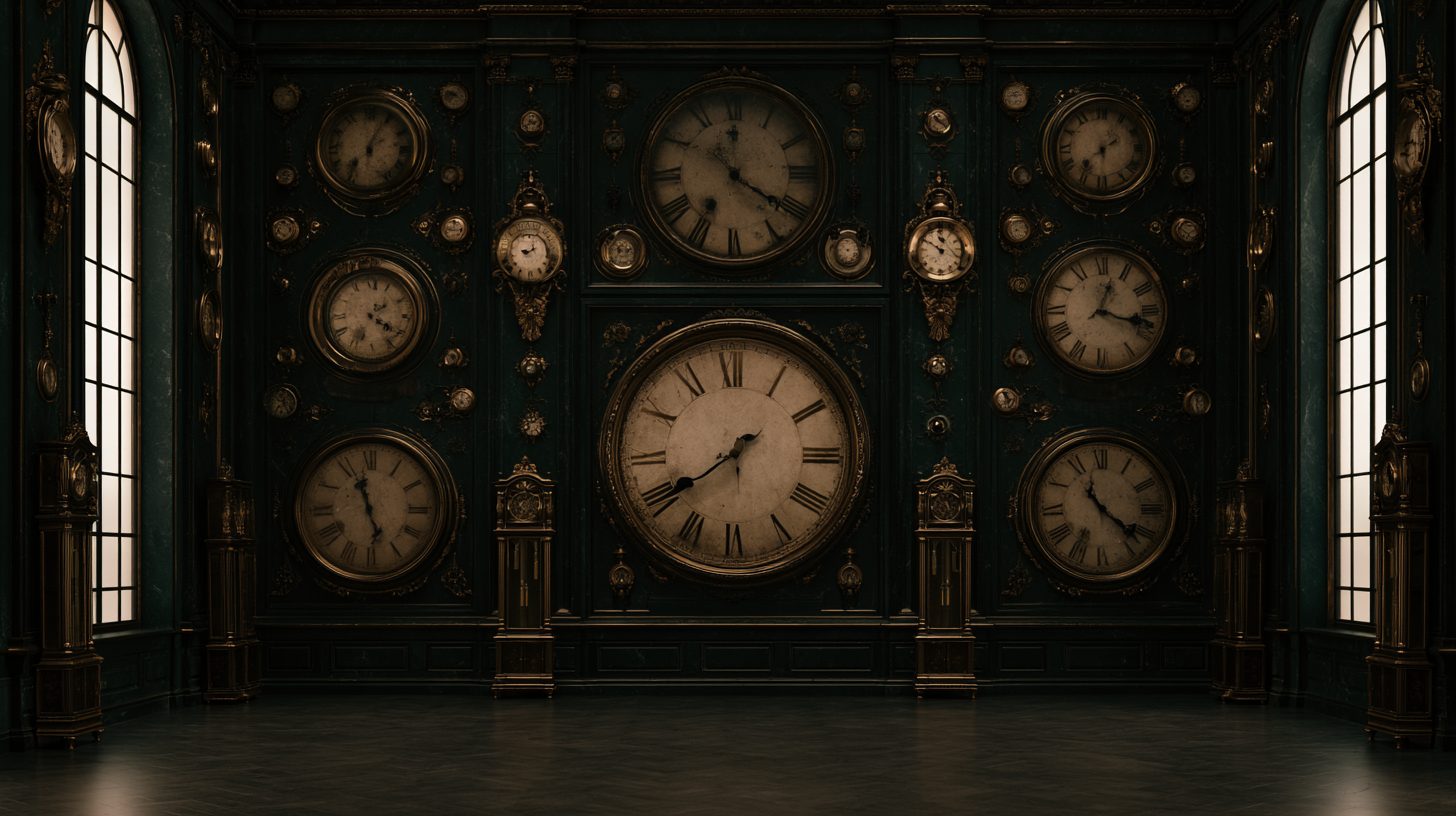
An endless wall of clocks.
Only one still running.
A museum filled with empty frames.
One frame containing only light.
Each image asked the same silent question:
“What did you notice?”
Lab note:
The audience experiences recognition before they hear me talk about it.
7/9
Tools & Creative Stack
• Midjourney — the original portrait and conceptual still
• Grok Imagine — image-to-video generation using chained final-frame continuity
• Screen capture — harvesting the last frame of every clip
• Kdenlive — editing and assembly
• Grok Imagine — AI lip sync — dialogue performance
• ElevenLabs — custom voice AI narration — voice performance
• Flor Music AI music — atmospheric score
Budget
The biggest expense wasn’t money.
It was attention.
This workflow rewards patience more than speed.
8/9
The biggest lesson wasn’t technical.
It was creative.
For years I’ve assumed that planning produces better work.
Projects like this keep arguing the opposite.
Improvisation isn’t the absence of structure.
It’s discovering the structure while you’re making it.
Happy accidents aren’t interruptions.
They’re collaborators.
The AI didn’t tell the story.
Neither did I.
We discovered it together.
TL;DR
Start with one image.
Trust your curiosity.
Keep the last frame.
See what happens.
9/9
Recognition reminded me that creativity isn’t always about inventing something new.
Sometimes it’s about paying attention long enough to notice what was already there.
That’s true of images.
It’s true of stories.
And maybe it’s true of people.
Some projects begin with a blank page.
Others begin with someone looking back at you from an image library, quietly waiting to be recognized.
Steve Teare
video alchemist
TerminallyBored.Monster
Palouse, Washington USA