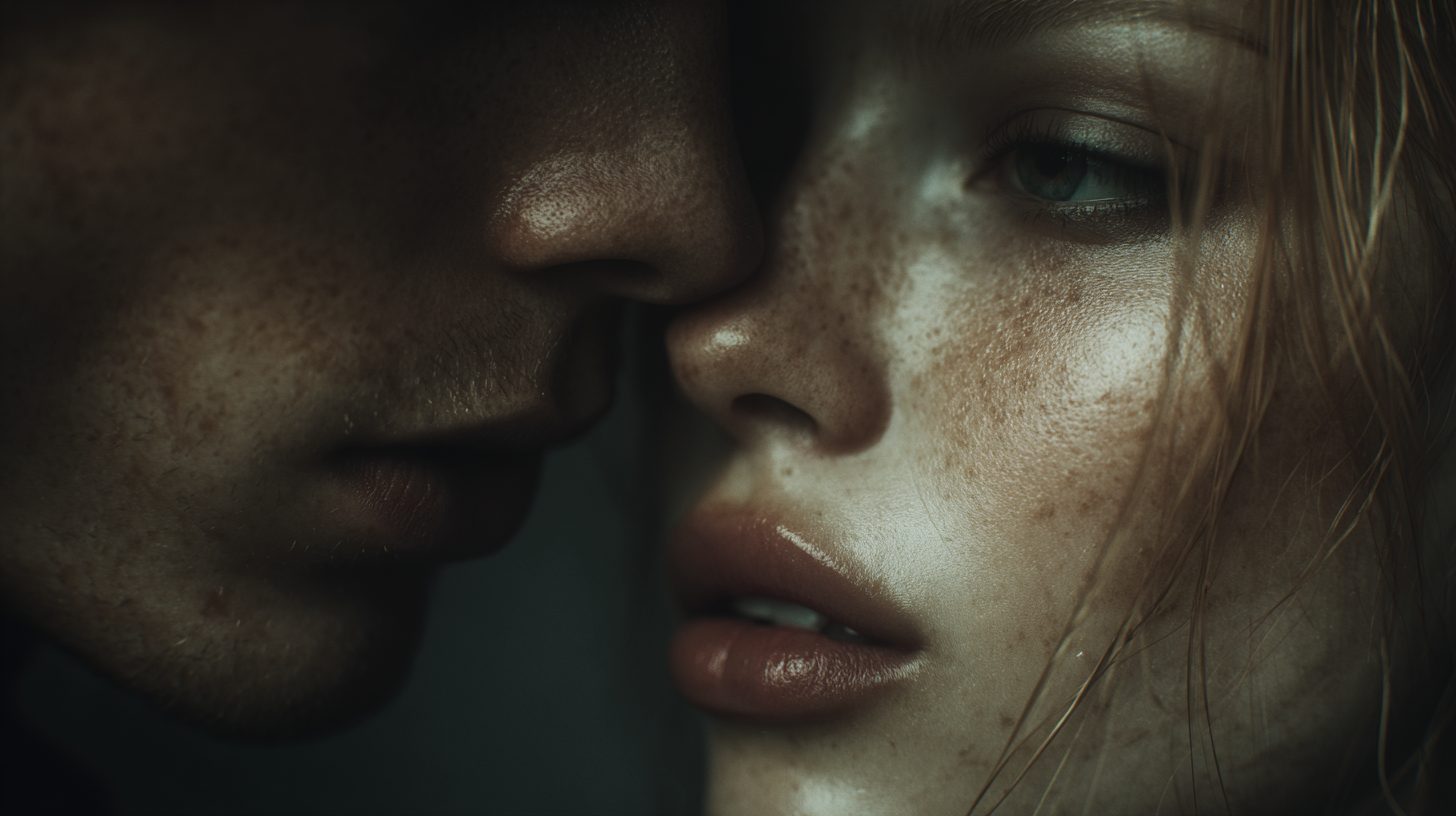
In October 2025 I released a video called Longing.
It’s a 5:57 minute cinematic piece exploring loneliness, curiosity, and the quiet gravity that draws two people toward connection.
The video was published on October 22, 2025 in 16:9 cinematic format and, somewhat unexpectedly, it became one of the strongest performers on my channel. As of this writing it has 13,236 views, which for my small experimental channel is significant.
That surprised me.
Because Longing was not designed around spectacle, action, or even traditional romance.
It was built around something much smaller.
Micro-expressions.
Tiny gestures.
And slowing everything down.
This post explains how that idea emerged and why I think it worked.
The Original Idea: Loneliness First
Most of my videos start from an emotional seed rather than a visual one.
For Longing, the seed was recognizing loneliness.
Two people are in the same room.
They notice each other.
But they don’t rush toward connection.
They observe.
They breathe.
They hesitate.
The story arc was simple:
- Loneliness
- Awareness
- Curiosity
- Tension
- Near-connection
- Release
The key was resisting the urge to move quickly.
Most visual storytelling jumps immediately from meeting → attraction → physical contact.
But real human connection rarely works that way.
Real attraction lives in the pauses.
Slowing the Clock Down
The experiment with Longing was to stretch time.
The video deliberately slows emotional progression through:
- long pauses
- minimal movement
- sparse dialogue
- lingering camera frames
- music with slow pulses and unresolved harmonies
Instead of constant action, the energy comes from anticipation.
When viewers wait long enough for something to happen, even a tiny gesture becomes meaningful.
A glance.
A breath.
A hand hovering near another hand.
Those become emotional events.
Micro-Expressions as Storytelling
This is where the real experiment happened.
Rather than showing obvious romance, the video focuses on micro-expressions:
- a slight lean forward
- fingers hovering close but not touching
- cautious glances
- breathing patterns
- subtle changes in posture
These are extremely small signals.
But they communicate something powerful: attention.
Two people noticing each other.
Trying to understand the space between them.
When those signals accumulate, the audience begins to feel tension.
Not loud tension.
Quiet tension.
The kind that exists in real rooms between real people.
Why Micro-Gestures Are Hard to Generate
There was also a technical challenge.
Most AI image tools are excellent at dramatic scenes.
They are much less reliable with subtle human gestures.
Prompts like:
- “hands almost touching”
- “leaning in slightly”
- “cautious curiosity in facial expression”
…are difficult to produce consistently.
You often get exaggerated poses instead.
So a large part of the creative work became selecting the rare frames where subtlety appeared naturally.
When those images are sequenced carefully, the brain fills in the emotional story.
The Rhythm of Desire
During the creative discussion that shaped this piece, a pattern emerged.
Desire in visual storytelling often follows a rhythm:
- Yearning
The sense that something is missing. - Recognition
Two people notice each other. - Tension
Micro-gestures and hesitation. - Near-connection
Hands hover. Faces draw closer. - Release
A kiss, embrace, or moment of physical contact. - Stillness
Quiet reflection after the emotional peak.
Longing deliberately stretches the middle phases.
The video lives inside tension and almost-touch for most of its runtime.
Only near the end does the connection resolve:
A passionate kiss.
Then a slower kiss.
And finally a shy, vulnerable moment where the woman bares her shoulders and looks back at him before the image fades to black.
The emotional energy releases very late in the piece.
That delay makes the moment feel earned.
Why I Think It Worked
For my channel, 13,000+ views is meaningful feedback.
I suspect the reason is simple.
The video gives viewers something they don’t see very often anymore:
space to feel anticipation.
Modern visual media is extremely fast.
Cuts happen every second.
Emotions are obvious.
Everything resolves immediately.
But real connection is slower.
It’s awkward.
It hesitates.
When a video mirrors that rhythm, viewers subconsciously recognize it as authentic.
The Next Experiment
The original version of Longing runs 5 minutes and 57 seconds in horizontal format.
My next step is to re-edit it into a tighter 3-minute version and repurpose it into 9:16 vertical.
This will be another experiment.
Questions I’m curious about:
- Does the slower tension still work in a shorter format?
- Does changing the frame orientation affect intimacy?
- Will micro-expressions remain readable in a wider composition?
Final Thought
This experiment reinforced something I keep rediscovering in creative work:
The smallest signals often carry the most emotional weight.
A hand almost touching.
A breath held for one second too long.
A glance that lingers.
Those are the moments where desire actually lives.
And sometimes, if you slow the clock down enough, the audience will feel them too.
—
Steve Teare
TerminallyBored.Monster