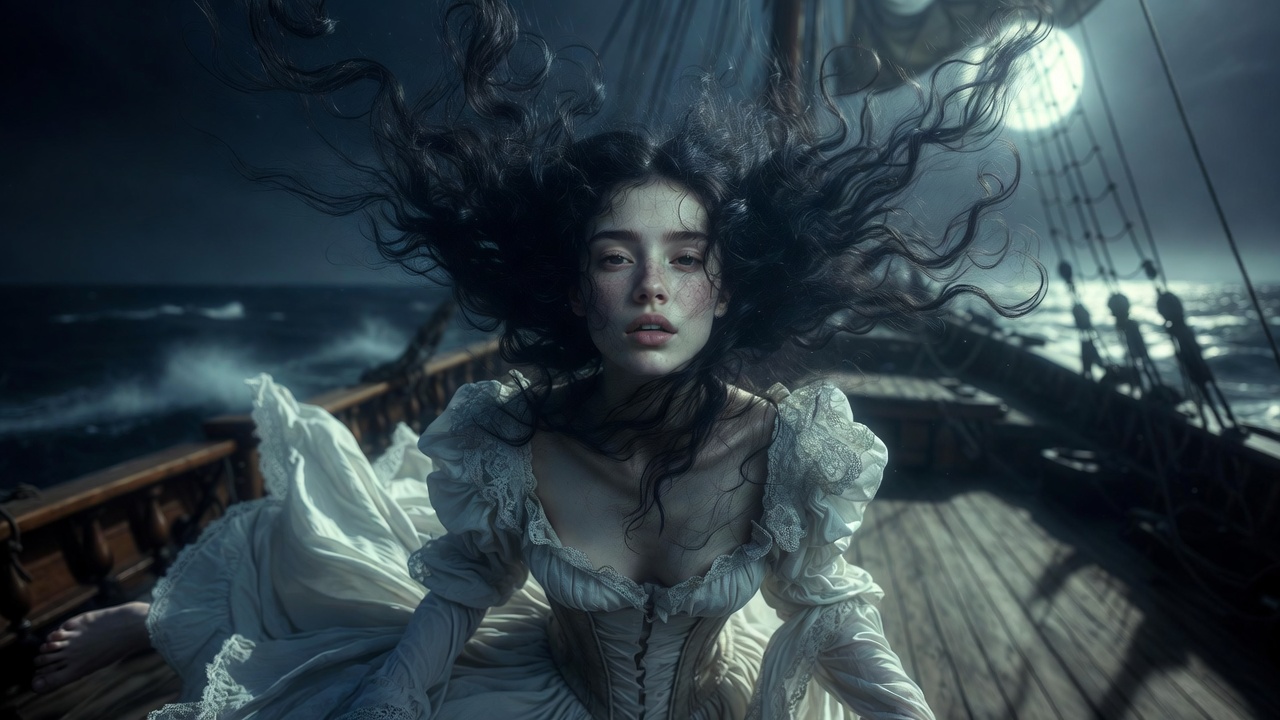
Some videos begin with a script.
This one began with a memory.
Years ago, a friend and I shared one of those wonderfully moments that could never be explained properly to anyone else. She dressed up (sort of) in a pirate costume and we took turns reading aloud from a book. No audience. No cameras. Just imagination doing what imagination does best.
It wasn’t ridiculous.
It was magical.
Months later, that memory resurfaced as inspiration for a poem.
Not a pirate poem.
A storm poem disguised as a pirate poem.
That distinction matters.
Watch it here:
2/9
The idea wasn’t to make another pirate video.
The goal was to capture something much harder to describe.
How do you film longing?
How do you visualize trust?
How do you create emotional tension without showing anything explicit?
That became the experiment.
Lab note:
I’ve learned that symbolism often carries emotion better than literal storytelling. The audience doesn’t simply watch symbols. They project themselves into them.
That’s where the magic happens.

3/9
Process: Building the mythology
Rather than writing a traditional screenplay, I built two characters.
The Sea.
The Captain.
Neither character is really about pirates.
The Sea became freedom.
Wildness.
Mystery.
Danger.
The Captain became endurance.
Commitment.
Courage.
A man willing to sail into impossible weather simply because something beautiful called his name.
Everything else grew naturally from those two ideas.
Lab note:
Whenever a scene felt weak, I discovered I wasn’t writing about the characters.
I was writing about the props.
As soon as I returned to the emotional metaphor, the dialogue came alive again.
4/9
Process: Letting AI become the orchestra
Creating this film required directing an entire orchestra of AI tools.
Every instrument had a different job.
Some generated images.
Some helped refine dialogue.
Some inspired visual ideas I would never have considered on my own.
And that’s perfectly normal.
Creative work is rarely a straight line.
It’s wandering through fog until something unexpectedly beautiful appears.
Those moments are the ones worth keeping.
Lab note:
Happy accidents aren’t interruptions.
They’re invitations.
5/9
Tools & Creative Stack
Creative Direction
• ChatGPT
Storywriting
Grok (ChatGPT restrictions were too severe)
Image Generation
• Midjourney – stills
• Grok Imagine – image-to-video conversion with voiceover
Voice & Audio
• ElevenLabs – voice changer
Video Editing
• Kdenlive
Music
• Flow Music – AI-generated cinematic instrumentals
Workflow
- Write dialogue.
- Build visual prompts.
- Generate about 40 to 50 images.
- Discover unexpected compositions (culling).
- Edit everything into emotional rhythm rather than chronological order.
6/9
One unexpected discovery surprised me.
Music wasn’t supporting the dialogue.
The dialogue was conducting the music.
I originally searched for traditional pirate music.
It sounded wrong.
Too adventurous.
Too much treasure.
Too many sword fights.
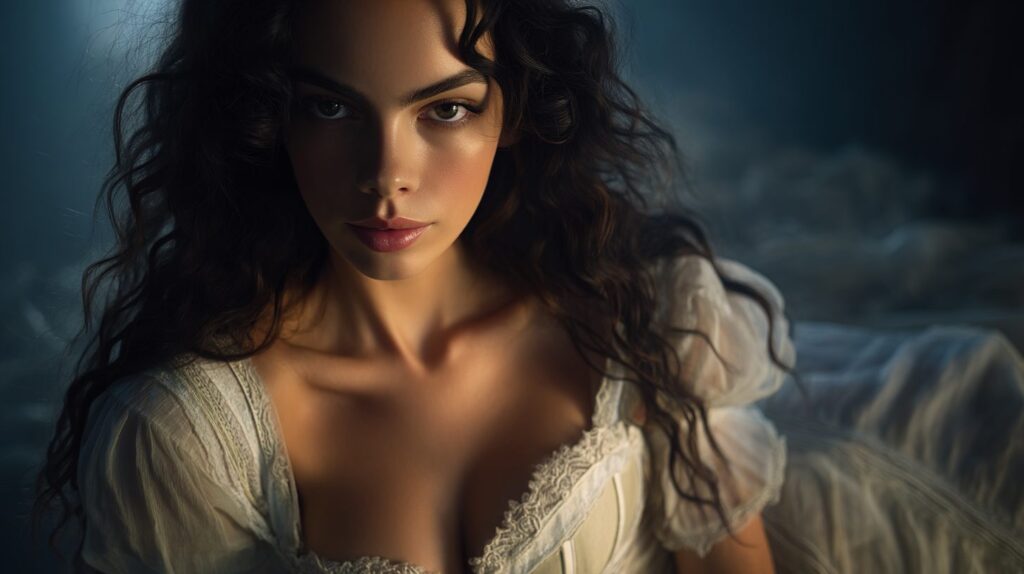
Instead, the score needed to sound like the ocean itself had feelings.
Everything changed once I stopped asking for pirate music and started asking for moonlit seas, emotional tension, elemental forces, and quiet longing.
The atmosphere became the storyteller.
7/9
The real lesson
AI is astonishing at generating images.
It still needs a human to discover meaning.
That’s my favorite part.
I don’t think of AI as replacing artists.
I think of it as handing artists a thousand paintbrushes and asking,
“So…
…what do you want to say?”
That’s where the work begins.
Not when the pixels appear.
When the choices begin.
8/9
If you’ve watched many of my videos, you’ve probably noticed something.
I keep returning to storms.
Ghosts.
Moonlight.
Old ships.
Abandoned castles.
Broken robots (nope).
Strange worlds.
Those aren’t random aesthetic choices.
They’re emotional landscapes.
They’re places where memory, imagination, and symbolism meet.
I suppose every artist eventually paints the same picture over and over.
Hopefully they simply become a little better at painting it.
9/9
TL;DR
Sometimes the best stories aren’t about pirates.
They’re about freedom wearing a pirate hat.
They’re about storms that become conversations.
They’re about discovering that imagination can safely say what ordinary language cannot.
That’s why I keep making these films.
Not because AI can generate beautiful images.
Because occasionally those images become windows into something quietly human.
Thank you for sailing with me.
Steve Teare
video alchemist
TerminallyBored.Monster
Palouse, Washington USA