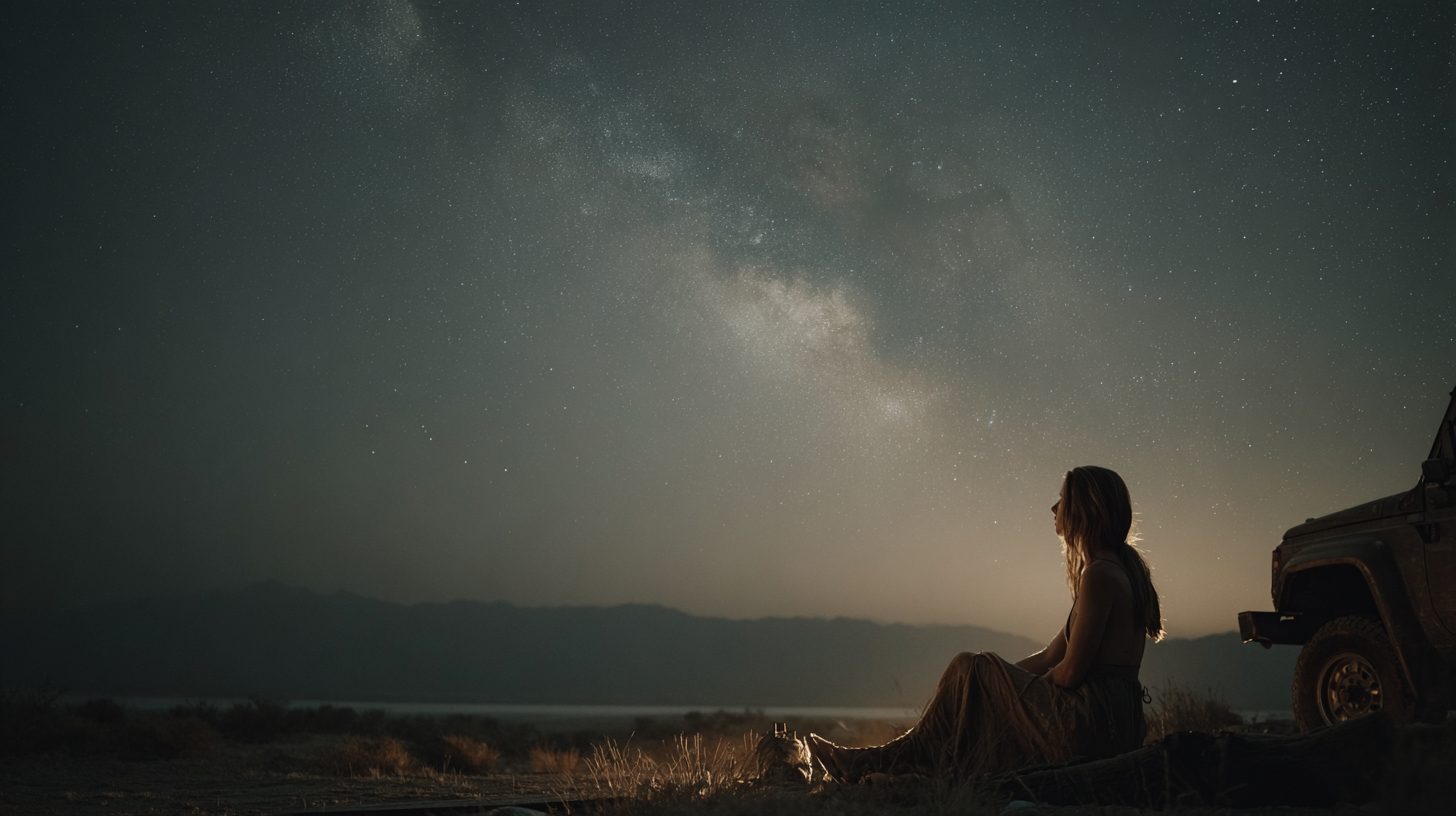
I thought I was making a video about death.
I wasn’t.
I was making a video about paying attention.
The project started with a simple poem by TrevinPoetry. Michael Caine’s AI voice would read it while a slowed instrumental stem of U2’s “With or Without You” quietly carried the emotion underneath. On paper, it sounded straightforward.
It wasn’t.
The more I worked on it, the more I realized that every technical decision either helped the audience breathe… or stole their breath away.
That surprised me.
I spend time chasing better AI images, sharper prompts, cleaner edits, and smoother transitions. This project reminded me that none of those things matter if the audience never has a chance to simply feel.
2/9
Step 1: Finding the heartbeat
The first decision was musical.
The original instrumental moved too quickly. Beautiful… but impatient.
So I slowed it from 110 BPM down to 90 BPM using Audacity effect > change speed.
It was amazing how such a small numerical change completely altered the emotional landscape. Suddenly Michael Caine’s deliberate cadence felt natural. His pauses weren’t empty anymore. They became part of the music.
Lab note:
The spaces between words carry as much emotional weight as the words themselves.
Sometimes slowing something down doesn’t reduce energy.
It reveals it.
Step 2: Mixing for emotion instead of loudness
The instrumental settled around -18 dB while the narration was normalized and gently boosted.
Normally I’d be thinking about loudness.
This time I was thinking about trust.
If the audience strains to hear the narrator, you’ve already broken the spell. If the music demands attention, you’ve broken it a second time.
The soundtrack shouldn’t compete with the voice.
It should quietly hold it.
3/9
Step 3: Stop illustrating every sentence
This became the biggest creative lesson of the project.
My first instinct was embarrassingly literal.
“The last conversation.”
Show people talking.
“The last embrace.”
Show a hug.
“The last laugh.”
Show people laughing.
Technically correct.
Emotionally flat.
The breakthrough came when I stopped trying to explain the poem and started trying to echo it.
Instead of showing a goodbye…
…show the empty porch after someone has already left.
Instead of showing conversation…
…show two people walking away in opposite directions.
Instead of showing loss…
…show the silence loss leaves behind.
Lab note:
The audience’s imagination is a better filmmaker than I am.
Give viewers enough information to complete the picture themselves.
4/9
Step 4: Building emotional movement
The finished storyboard eventually settled into twenty-three six-second shots.
That wasn’t an arbitrary number.
The narration lasted two minutes and eighteen seconds, which gave each visual just enough time to exist without overstaying its welcome.
The sequence gradually evolved.
First…
The possibility of endings.
Then…
Ordinary life.
Then…
Regret.
Then…
Nature quietly reminding us that everything beautiful eventually changes.
Finally…
Gratitude.
Looking back, I realized the video wasn’t structured around events.
It was structured around emotional temperature.
Cool dawns slowly became warm sunsets.
Empty spaces slowly became shared moments.
Isolation slowly became connection.
5/9
Step 5: Teaching AI to remember
This was where prompt engineering became surprisingly philosophical.
A prompt isn’t just describing an image.
It’s teaching the AI what deserves attention.
I found myself repeatedly writing things like:
“quiet”
“no talking”
“gentle breeze”
“warm natural light”
“contemplative”
“authentic”
Not because those words generate prettier pictures.
Because they generate slower pictures.
That’s a subtle but important difference.
Lab note:
AI doesn’t naturally understand restraint.
You have to prompt for silence just as intentionally as you prompt for spectacle.
6/9
Tools & Creative Stack
Voice
• ElevenLabs using a Michael Caine voice model
Music
• Slowed instrumental stem of U2’s “With or Without You”
Visual Planning
• ChatGPT for story structure and emotional pacing
• Midjourney still image generation
• Grok for six-second image-to-video generation
Editing
• Kdenlive
Creative Direction
• One stubborn human trying to convince a collection of AIs to breathe at the same speed.
7/9
The real lesson
This project quietly dismantled something I’d believed for years.
I assumed emotional impact came from dramatic moments.
Big reveals.
Big music.
Big performances.
Instead, this poem kept whispering the opposite.
A person tying their shoes.
Checking a phone.
A porch swing moving after everyone has gone inside.
Dust floating through afternoon light.
Those became the emotional anchors.
The extraordinary was hiding inside the ordinary all along.
Lab note:
When everything is spectacular…
Nothing is.
8/9
What AI taught me about being human
This may be the strangest lesson of all.
The AI never understood the poem.
Not really.
It understood prompts.
Composition.
Light.
Lens choices.
Color grading.
I was the one responsible for meaning.
That realization was strangely comforting.
Every new AI model can make prettier pictures.
None of them decides which picture matters.
That’s still our job.
As video alchemists, we aren’t replacing imagination.
We’re conducting it.
The AI plays the instruments.
We still write the music.
9/9
The closing line of the poem stayed with me long after the timeline was finished.
“How lucky am I to have witnessed this before I disappeared.”
That’s not really a sentence about death.
It’s a sentence about gratitude.
Maybe that’s what this whole project was trying to teach me.
Not to cling tighter.
Not to create faster.
Not to squeeze one more image into the timeline.
Just to notice.
To notice the light through the window.
The laughter that wasn’t planned.
The quiet after the music ends.
The ordinary moments that someday become the stories we tell.
TL;DR
The best AI images weren’t the most spectacular ones.
They were the ones that left enough room for the audience to remember someone they loved.
Steve Teare
video alchemist
TerminallyBored.Monster
Palouse, Washington USA