It turned out to be about me.
The seed for this video was a question that has been bothering me for a while: What happens when someone you care about shows you something about yourself that you really don’t want to see?
Not because they hurt you.
Not because they intended to change you.
They simply held up a mirror.
And suddenly there it was.
The part of me that grips too tightly.
The part that reaches when it is afraid.
The part that can confuse love with reassurance.
Ouch.
Apparently the creative process was not going to let me hide from that one.
2/9
The original idea was much less complicated.
I wanted to make something about a forge.
Fire. Iron. A hammer. Transformation.
Pretty straightforward, right?
Well…
AI filmmaking has taught me that “straightforward” is usually just the opening bid.
The deeper I went, the more I realized that the forge wasn’t supposed to represent something being done to me.
I wasn’t the piece of metal.
I was the blacksmith.
That distinction changed the entire film.
The experience may have supplied the heat and pressure.
But what I do with what I’ve been shown is mine.
3/9
Step 1: Start with the wound
The voiceover became the skeleton of the project.
I wasn’t interested in writing a conventional story with characters, plot twists, and a tidy resolution.
I wanted to explore an internal process.
The uncomfortable realization that intimacy can reveal things we have successfully avoided seeing.
Old fears.
Old wounds.
The places where reaching for someone can eventually become gripping.
And the particularly unpleasant sentence:
“Maybe it is a part of me.”
Not all of me.
But a part.
That matters.
Lab note:
One of the things I’ve learned from making hundreds of AI videos is that the strongest visual ideas often arrive after I stop trying to make the film “about” something.
The emotional seed comes first.
The story grows around it.
4/9
Step 2: I needed four different worlds
Once I understood the emotional progression, I divided the film into four visual worlds.
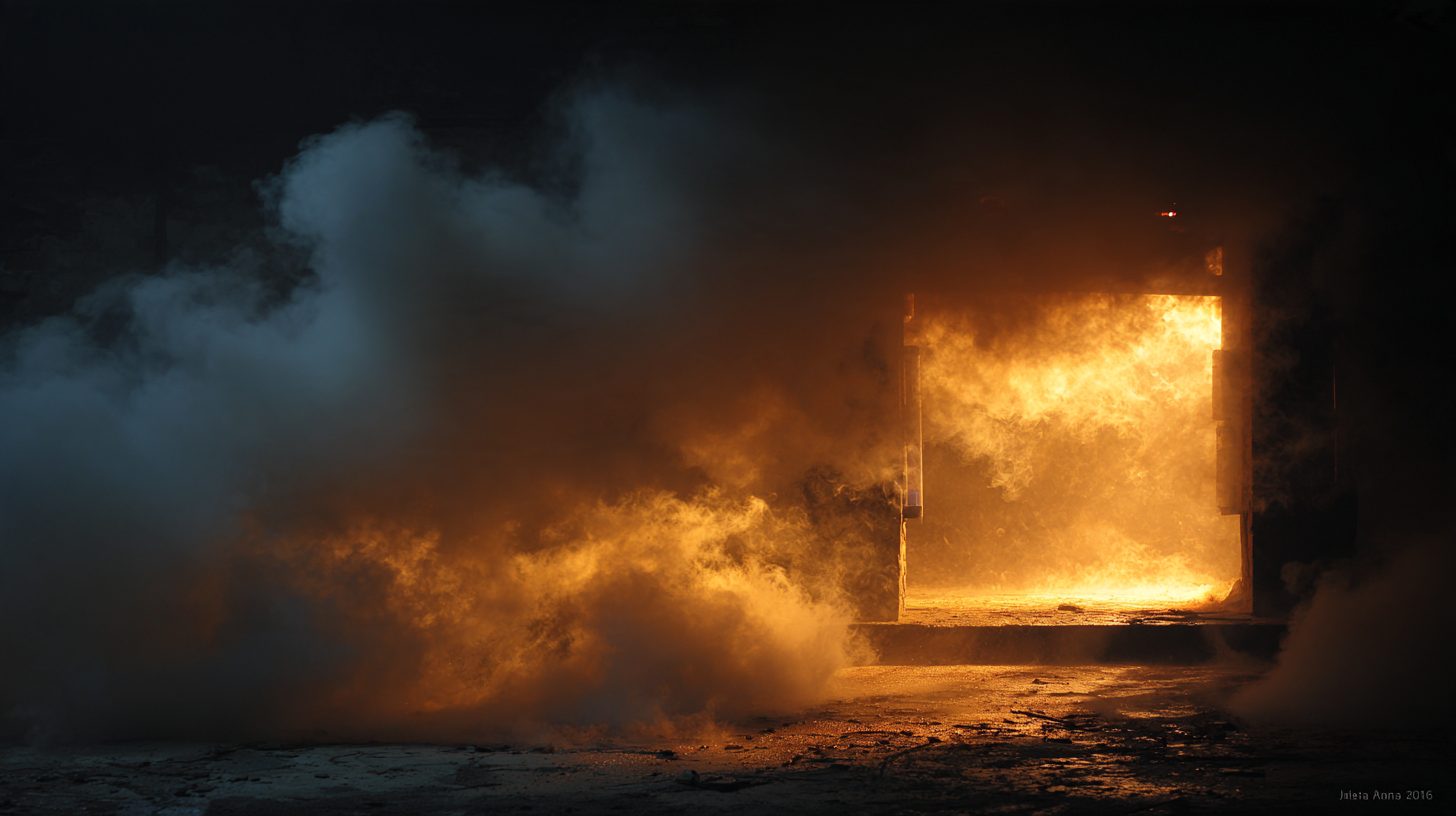
The first is the dead forge.
Cold stone. Black iron. Darkness. A furnace that hasn’t awakened yet.
Then comes something completely different — a dreamlike memory of a young woman in a golden-yellow dress walking through a field of wildflowers.
No explanation.
No dialogue.
Just beauty.
And then the beauty fractures.
The third world is black and white, surreal, and illustrative. Cracks. Tangled strands. Confining walls. A trapped hand. A broken mask.
These aren’t literal events.
They’re pictures of an interior landscape.
Finally, we return to the forge.
Only now there is fire.
And eventually, there are hands.
5/9
Step 3: The hands became the story.
This was one of those happy accidents that wasn’t really an accident.
I noticed that the film could tell the story through a sequence of hands.
First, reaching.
Then being trapped.
Then working.
Then gripping.
Then opening.
Then hammering.
That progression says almost everything the voiceover is trying to say.
The hands aren’t passive.
They’re doing something.
That’s important.
The older man doesn’t simply stand in front of the furnace while the universe transforms him.
He picks up the tongs.
He lifts the metal.
He places it on the anvil.
He grips.
He releases.
He raises the hammer.
He works.
Lab note:
AI is remarkably good at giving you an image that you didn’t consciously know you needed.
Sometimes the trick is noticing what the happy accident is trying to tell you.
6/9
Step 4: Making the forge feel physical.
For the forge sequences, I wanted the imagery to feel ancient and tangible.
Rough black iron.
Stone walls.
Coal.
Smoke.
Incandescent metal.
Heavy tools.
And especially the gloves.
Not generic cinematic gloves.
Heavy-duty blacksmith gloves made from thick, worn dark brown leather, with reinforced palms and fingers, broad protective cuffs extending several inches above the wrists, heavy stitching, deep creases, scuff marks, and darkened areas from years of hard work.
Yes, I became very specific about gloves.
This is what happens when you’ve spent enough time trying to make AI remember that a person’s hands are attached to the rest of the person.
7/9
Step 5: The music had to change too
I didn’t want a soundtrack that simply sat underneath the film.
The music needed its own transformation.
It begins cold and sparse.
Then it opens into something warm and almost dreamlike during the memory.
As the psychological realization arrives, the harmony becomes unstable.
Then the forge takes over.
Deep tones.
Metallic resonance.
Pressure.
A deliberate pulse.
And eventually, the music itself has to let go.
Near the end, everything falls away.
No grand orchestral victory.
No inspirational swell telling me that I have finally conquered myself.
Just the forge.
Then silence.
Then the hammer.
8/9
The tools
Midjourney — character references, cinematic stills, dreamlike imagery, and the surreal illustrated section
Grok Imagine — animation of the generated stills
ElevenLabs — voice generation
Flow Music — the three-minute evolving instrumental score
Kdenlive — editing, timing, voiceover, music, sound design, and final assembly
The actual filmmaking is still a ridiculous mixture of machines, prompts, retries, timing adjustments, and me staring at a six-second clip wondering why the blacksmith suddenly has three thumbs.
But somewhere inside all that machinery, something interesting happens.
The tools stop being the point.
They become instruments.
9/9
The real lesson
I started this project thinking I was making a film about transformation.
I think I was actually making a film about agency.
Someone can reveal something in you.
They can matter enormously.
They can even become the spark that makes you look more honestly at yourself.
But they cannot do the forging for you.
That’s your work.
Heat.
Pressure.
Time.
Patience.
And maybe a willingness to admit that becoming someone new doesn’t require destroying who you were.
It requires taking what you’ve been given — even the painful parts — and deciding what you’re going to make from it.
The final frame is black.
No finished sword.
No shiny piece of metal held triumphantly toward the camera.
Just the sound of the hammer striking the anvil.
Because the work isn’t finished.
Maybe it never is.
And honestly, that’s probably the point.
TL;DR: Sometimes another person doesn’t change you. They reveal something that was already there. What happens next is up to you.
Steve Teare
video alchemist
TerminallyBored.Monster
Palouse, Washington USA