There’s a strange moment that happens sometimes while editing.
You’re staring at the timeline.
Music playing.
Waveforms moving.
Images flickering past like dreams trying to remember themselves.
And suddenly you realize:
“Oh.
This isn’t about what I thought it was about.”
That happened to me this week.
What started as a simple AI-assisted music/video experiment slowly mutated into something else entirely:
a quiet meditation on distance, memory, fatherhood, and emotional drift disguised as gothic cosmic art.
Which is apparently my brand now.
Honestly, there are worse creative destinies.
2/9
The seed of the whole thing was a year-old voiceover (waiting for death?)
Not polished.
Not “written for performance.”
Just emotionally honest.
I made an 11-minute ElevenLabs voiceover talking about my son moving away. That was created in January of 2024. And it sat dormant. Too painful to make something with it.
For 24 years, another human being existed inside the soundscape of my life:
music through walls,
keyboard tapping,
inside jokes,
random philosophy conversations at 1 a.m.
Then one day…
silence.
Not tragic silence.
Just adult-life silence.
The kind that sneaks up on you slowly while pretending to be maturity.
But, I started collecting bits and pieces in a project file. I placed the voiceover in it. Eventually I trimmed it to less than 1-minute of audio.
I stumbled across Rocket Man by Elton John online. I downloaded several male covers and eventually selected one. Why? I didn’t know yet … but it went into the project file.
Not because I suddenly became an astronaut.
Although honestly, emotionally speaking? Maybe a little.
It hit me differently this time:
“It’s lonely out in space…”
That line stopped being metaphorical.
3/9
Step 1: Building emotional artifacts instead of “characters”
I knew immediately I did not want literal storytelling.
No actors.
No fake emotional scenes.
No guy sadly staring out a rainy window while cinematic piano music plays.
AI video already has enough of that.
Instead, I wanted objects.
Artifacts.
Symbols.
Things that felt emotionally inhabited.
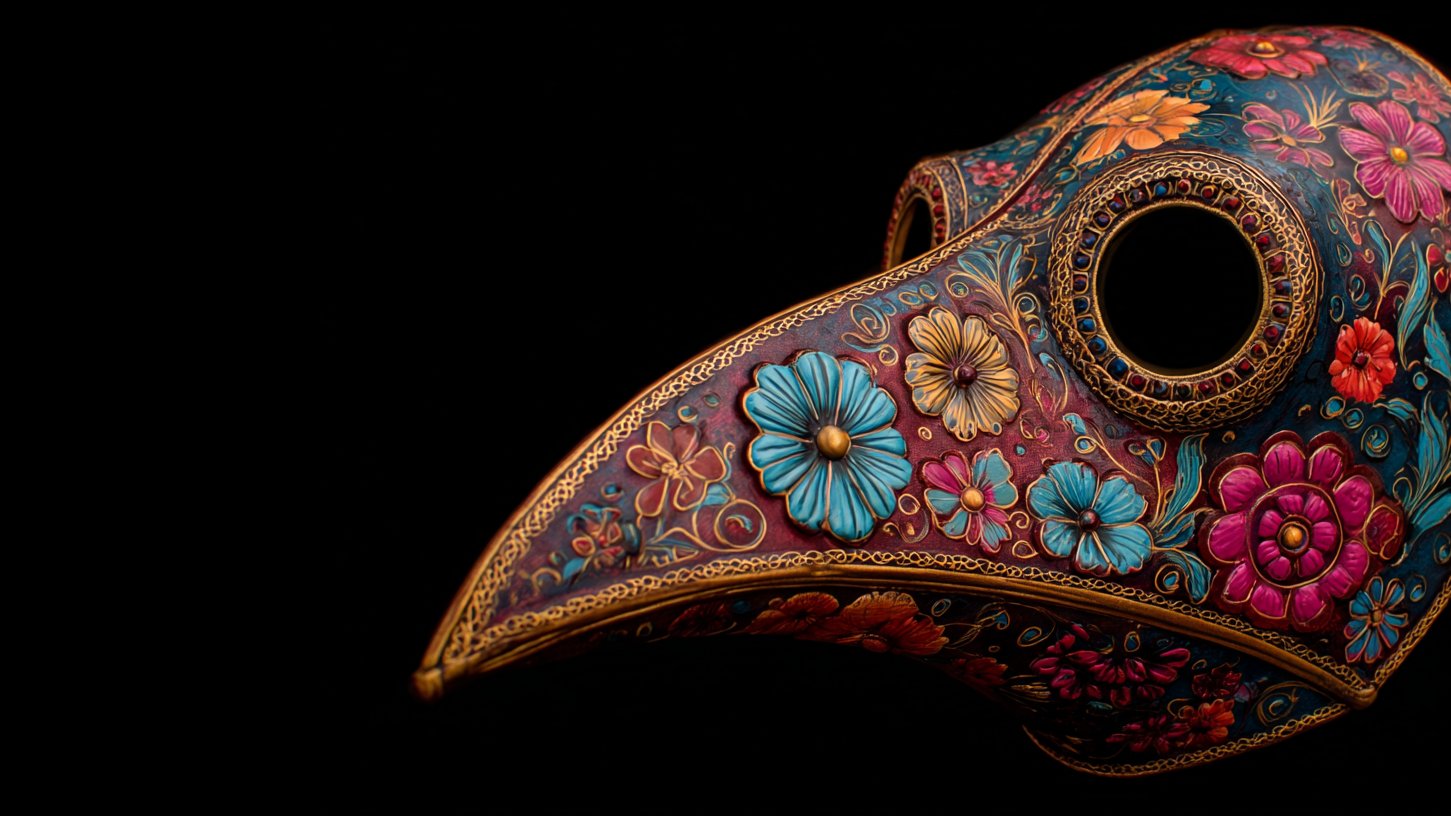
So I started generating plague doctor masks in Midjourney.
But not horror-movie plague doctors.
I combined them with Día de los Muertos sugar-skull aesthetics:
painted ornament,
celebratory death imagery,
bright ceremonial colors layered over decay.
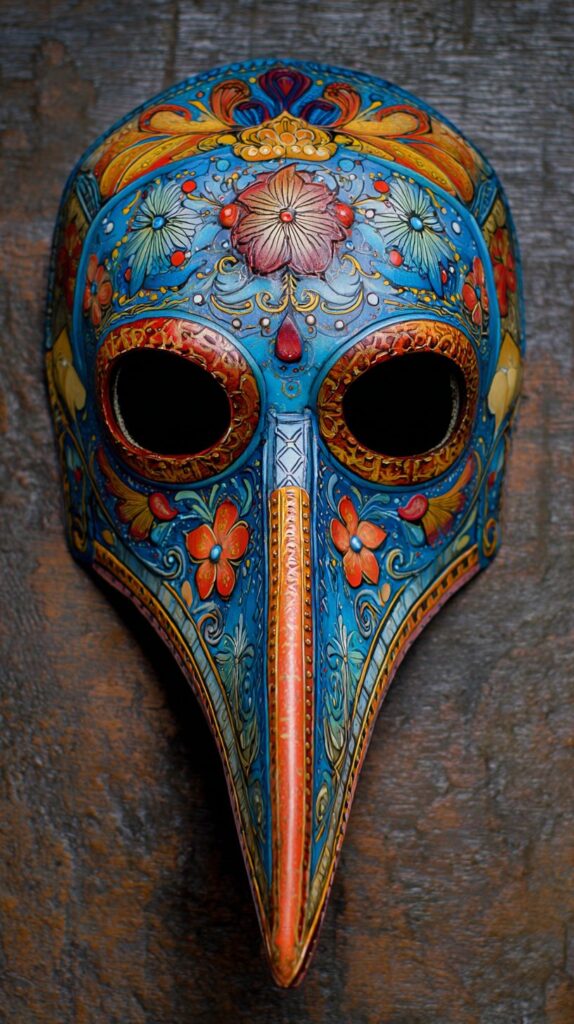
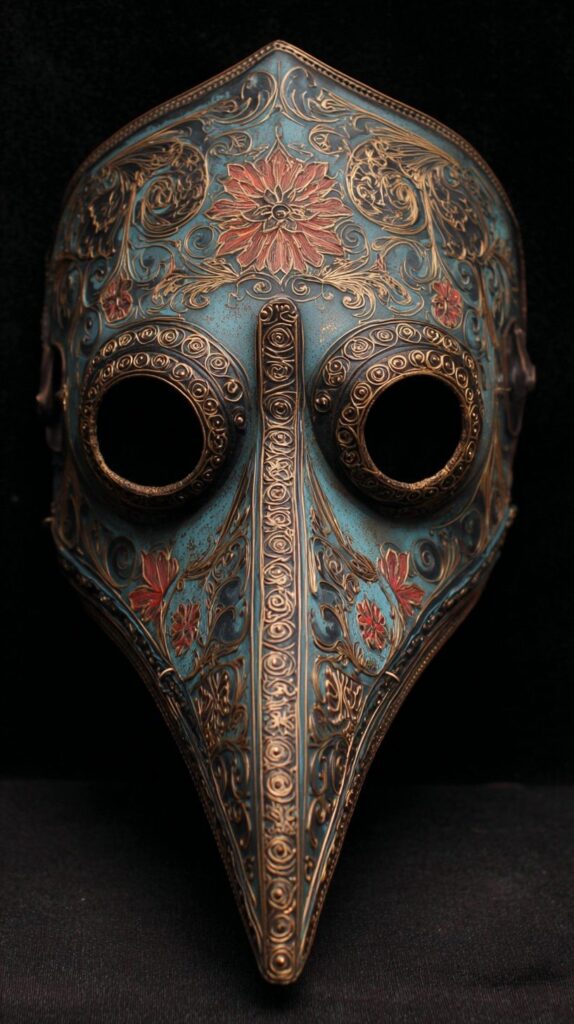
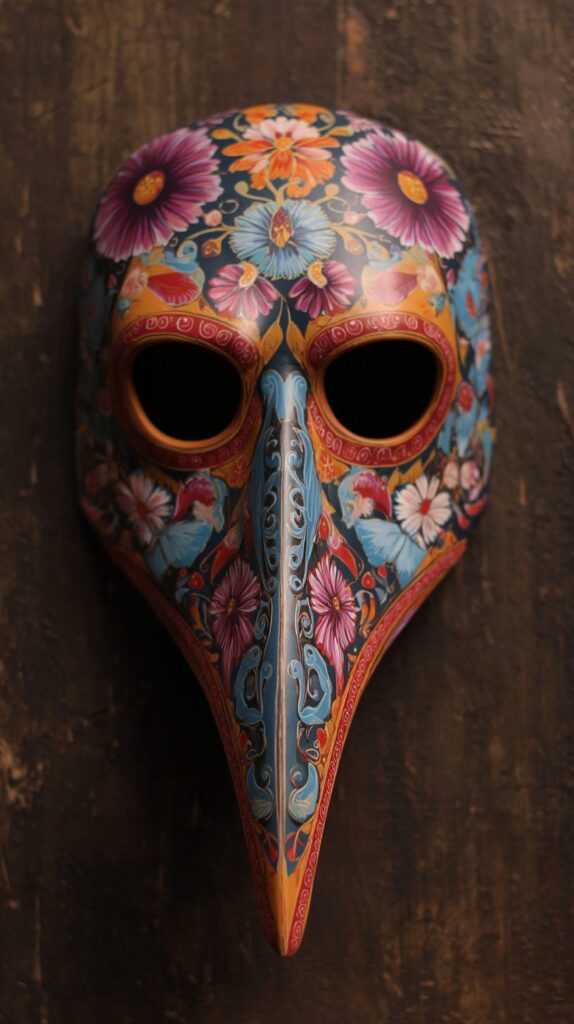
The result felt weirdly tender.
Not scary.
Not grotesque.
More like:
“grief trying to decorate itself so it can survive.”
Lab note:
This is one of the weird superpowers of AI art generation:
you can emotionally crosswire symbolic systems that would never normally coexist.
Sometimes the collision creates nonsense.
Sometimes it creates emotional truth.
4/9
Step 2: The raven skull incident
At some point I added raven skull imagery. My friend Craig is dying. He is a prisoner in his wheelchair and almost speechless from Parkinson’s Disease. Craig’s totem is the raven. He needed to fly free.
Again:
not horror.
I wasn’t trying to make edgy gothic wallpaper for a teenager named Damien.
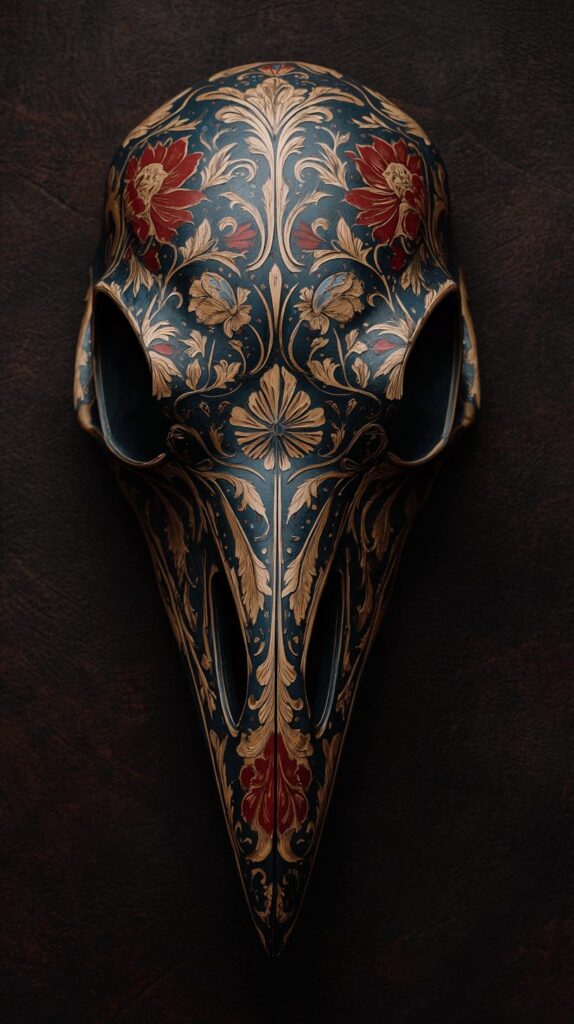
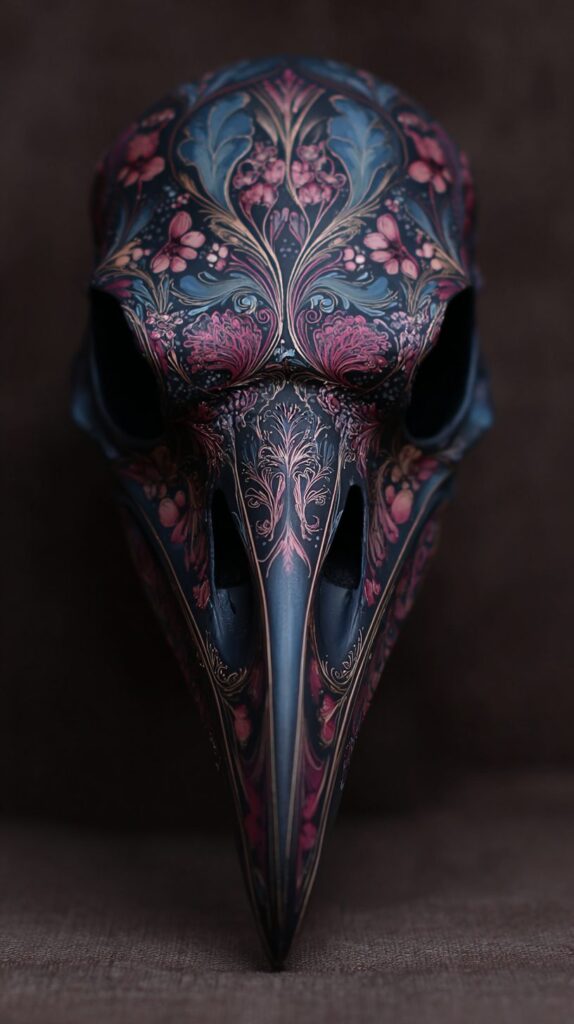

The raven skulls felt more like memory containers.
Thought fragments.
Signals.
I generated around ten variants:
painted,
lacquered,
obsidian-black,
ceramic,
covered in hairline cracks.
And something interesting started happening.
The project stopped feeling “illustrated.”
It started feeling archaeological.
Like I wasn’t inventing visuals anymore.
I was uncovering emotional relics from some alternate universe version of my own life.
Which sounds dramatically unhinged when I type it out like that.
But creatively?
It was extremely productive.
5/9
Step 3: Space became emotional geography
Then came the cosmos imagery.
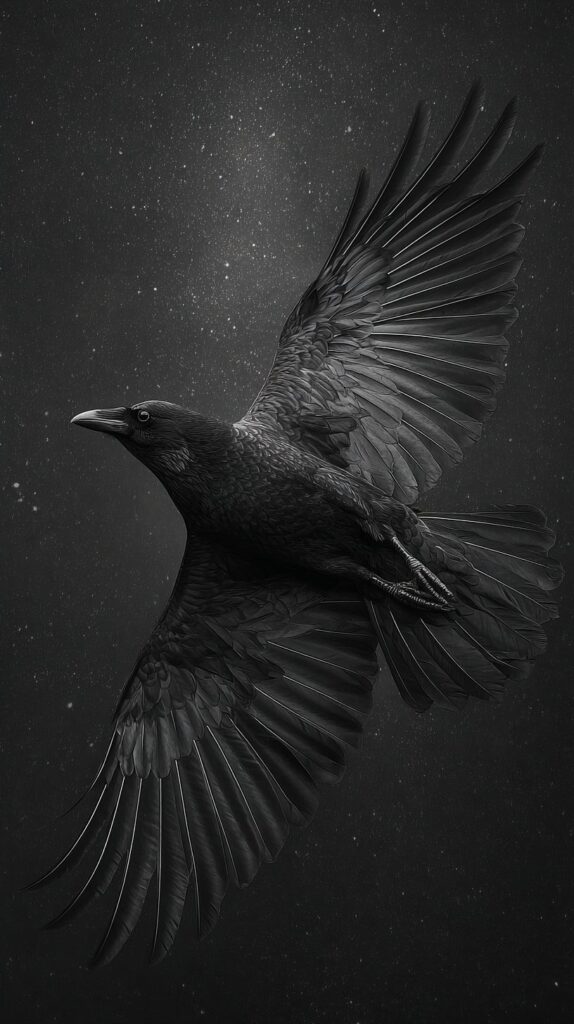
Originally I generated raven-flight imagery drifting through nebulae and star fields.
But during editing I realized something important:
The literal ravens didn’t matter.
The feeling mattered.
Distance.
Signal loss.
Drift.
Silence between transmissions.
That was the actual emotional core.
So instead of making the visuals more narrative, I pushed them further into abstraction:
fragmented silhouettes,
floating debris,
celestial particulate clouds,
dark shapes dispersing into impossible scale.
The farther the visuals moved away from literal interpretation,
the more emotionally accurate they became.
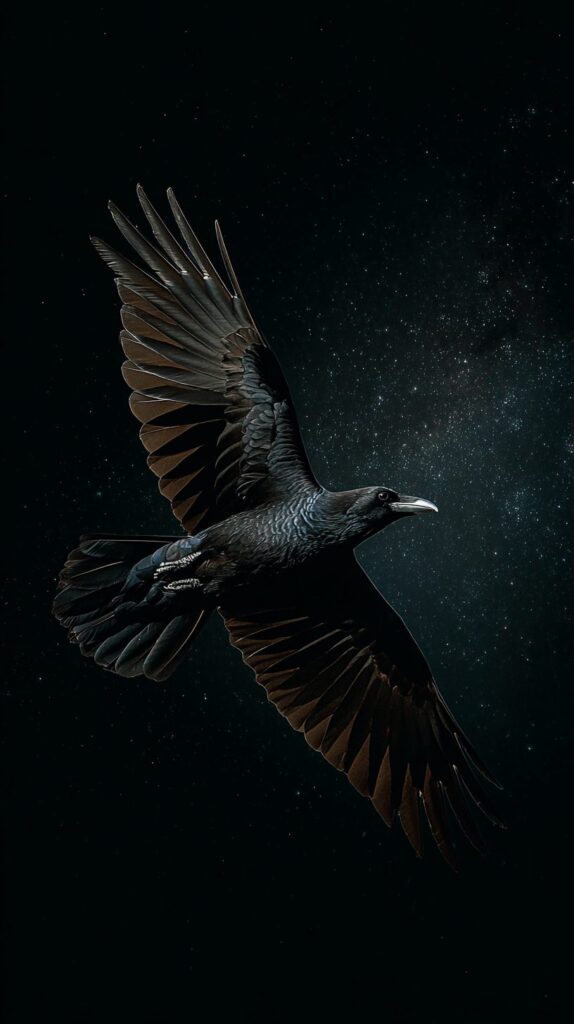
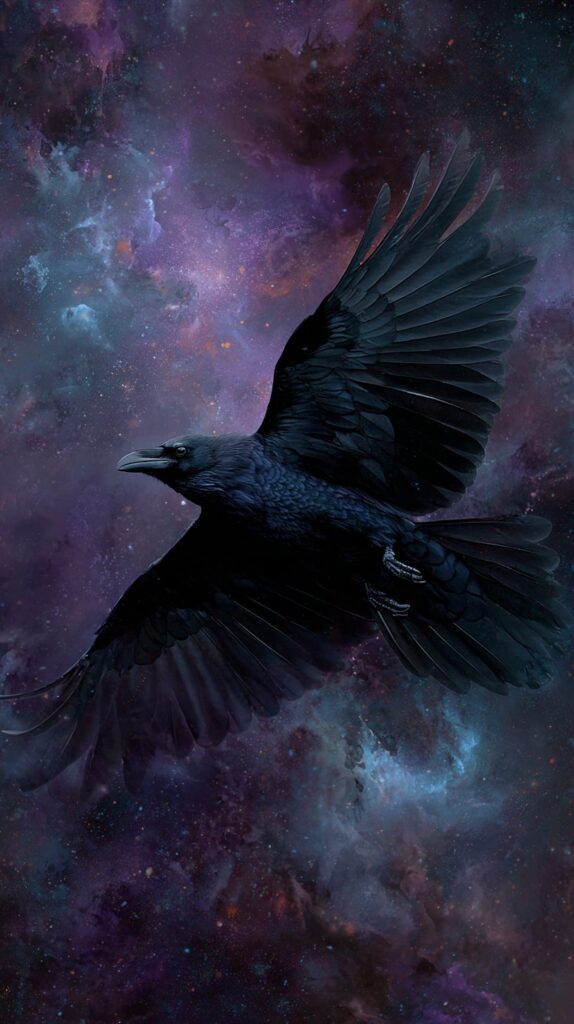
Which feels backwards until you’ve done enough creative work to realize:
literalism is often emotional camouflage.
Lab note:
AI is bizarrely good at generating subconscious texture.
Not meaning.
Texture.
Meaning still has to be directed by a human being willing to recognize themselves in the accident.
6/9
Step 4: Fighting the urge to over-explain everything
This was the hardest part.
I am deeply susceptible to over-contextualizing my own work.
Every artist has a favorite form of self-sabotage.
Mine is explanatory narration.
I kept wanting to make the symbolism “clear.”
The masks represent this.
The skulls represent that.
The space imagery means emotional separation.
The blah blah blah of it all.
But the project only started breathing when I stopped trying to intellectually pin it to the table.
So I let images linger longer.
I allowed ambiguity.
I trusted visual rhythm more than explanation.
Which was uncomfortable.
I’m a words person.
I trust language.
But this project wanted emotional gravity instead of narrative clarity.
Those are not the same thing.
Rocket Man began as fragments.
A year-old voiceover about my son moving away.
A lingering feeling of silence inside the house.
Plague doctor masks painted like Día de los Muertos relics.
Raven skulls.
Cosmic debris.
A male cover of Rocket Man that suddenly stopped feeling metaphorical.
This video was never storyboarded.
It emerged slowly through improvisation, emotional archaeology, and a lot of late-night experimentation with AI-assisted tools.
What started as “just another AI video” became something much more personal:
a meditation on distance, memory, fatherhood, grief, and emotional drift.
The masks are not horror symbols.
The ravens are not about death.
The space imagery is not science fiction.
They became emotional artifacts.
Signals.
Memory fragments drifting through impossible scale.
This project reminded me that AI does not create meaning by itself.
But sometimes, if you throw enough memory, symbolism, longing, and accident into the machine…
…it throws back something that recognizes you.
7/9
Tools & creative stack
Here’s the actual lab setup behind the curtain:
Visual Generation
• Midjourney – still images
• Grok Imagine – image-to-video conversion
• WAN AI – image-to-video plus lipsync
Voice / Audio
• ElevenLabs – narrative voiceover
• LALAL.AI – Vocal stem extraction tool
• TONAL SFX – layered atmospheric sounds (G minor) underneath Rocket Man lyrics.
Editing
• Kdenlive – open-source video editor
Writing / Development
• ChatGPT – rewrite of narration
• insomnia – cPTSD
• existential fatherhood nostalgia apparently
Workflow reality:
This was not “generate and done.”
This was:
generate,
reject,
mutate,
iterate,
regret,
regenerate,
accidentally discover something interesting at 2:13 a.m.
Repeat until emotionally compromised. Beach-combing ideas from subconscious flotsam and jetsam.
Found art is beautiful.
8/9
The real lesson
The strange thing about this project is that there was never an original plan. It was all organic and improvised.
There were no sequences storyboarded in my head.
And yet the final result feels more honest because of that.
Because the project was never about “building a cool AI video.”
It became about listening carefully enough to recognize what the project actually wanted to become.
That sounds mystical.
It probably is a little mystical.
But every serious creative person eventually encounters this phenomenon:
you begin as the architect,
and somewhere along the line you become the translator.
The work starts telling you what it needs.
Your job is to stop arguing with it.
TL;DR:
Apparently if you combine fatherhood, death, Elton John, plague doctors, ravens, AI image generation, and emotional loneliness…
you get cosmic grief ritual cinema.
Who knew.
9/9
I think one reason I keep returning to AI-assisted art is because it behaves a little like memory itself.
Incomplete.
Associative.
Dreamlike.
Sometimes profoundly wrong.
Sometimes accidentally devastating.
You throw fragments into the machine:
a lyric,
a fear,
a symbol,
a color,
a feeling you don’t fully understand yet.
And occasionally the machine throws something back that feels uncomfortably close to truth.
Not because the AI understands you.
But because you recognize yourself in what emerged from the noise.
That recognition is the real collaboration.
The software didn’t make the meaning.
It helped me discover where the meaning was already hiding.
Steve Teare
video alchemist
TerminallyBored.Monster
Palouse, Washington USA