
There’s a moment in music editing where you stop planning and start listening.
I was deep in the sound design for NAILED — my 16-episode neo-noir detective series — building the needle drop for the cold open of an episode where Cupcake, the story’s obsessive antagonist, begins stalking Lissette, our sharp and seductive detective. I needed something that felt wrong in a specific way. Not horror-movie wrong. Romantic-gone-sideways wrong.
I heard a 30-second clip. Cello. Piano. Quiet. Familiar in a way I couldn’t quite name.
My gut said: follow this.
So I did.
2/10
What Is a Needle Drop – and Why It Works
Before we get into the lab, a quick definition.
A needle drop is when a pre-existing, recognizable song is dropped into a scene to carry emotional weight. Think of the moment in a film where a song you already know starts playing — and suddenly the scene means something different because of it.
The power isn’t just in the music. It’s in what the audience already carries about that song.
Every piece of emotional memory attached to it gets activated instantly. No setup required.
That’s the needle drop’s superpower — and it’s why choosing the right song is everything.
3/10
The Song That Chose Me
That 30-second clip? It was a stripped-down piano and cello instrumental of “Every Breath You Take” by The Police.
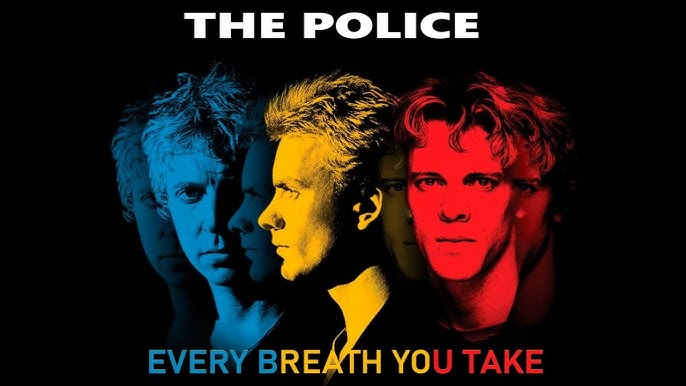
Now — you probably know this song. Most people do. It’s one of the most-played songs in radio history. Sting wrote it as a cold, obsessive lyric dressed in the clothes of a love song. Even he has said it surprises him how many people hear it as romantic.
Which made it perfect for what I needed.
Cupcake isn’t a monster. She’s a woman who loves the wrong way — too much, too close, too quietly. She’s watching Lissette the way someone watches a person they can’t stop thinking about. Obsession.
The song’s words, dropped over that image, flip completely:
Every breath you take, And every move you make, Every bond you break, every step you take, I’ll be watching you
In the original context: devotion. In this context: a threat wearing devotion’s clothing.
I didn’t engineer that inversion. I followed intuition into it. And then I recognized what I had.
4/10
Step 1 – Finding the Right Vocal
I needed a vocal version I could work with. I found a female cover by Beatrice Florea — and that gender shift added another layer. A woman’s voice singing those words to another woman changed the emotional register entirely. More intimate. More unsettling. More sinister.
I pulled a 31-second clip from the first two verses. Just enough to establish the idea before the scene moves.
Lab note: In needle drops for short-form vertical content, you rarely need more than 30 seconds of a song. The recognition happens fast. Trust it.
5/10
Step 2 – Splitting the Stem
After downloading the cover using ytDownloader freeware, I ran the Beatrice Florea cover through LALAL.AI to isolate the vocal track from the instrumental backing.
Why? Because I didn’t want her instrumentation. I wanted 30 seconds of her voice — clean — sitting on top of my own custom-built soundscape.
The result:
A flat major - 117 BPMEvery Breath You Take (Beatrice Florea cover)Vocals split by LALAL.AI
I then ran the vocal stem through Audacity with default compression settings to even out the dynamics and help it sit in the mix.
6/10
Step 3 – Building the Music Bed in Producer.ai
Here’s where it got interesting.
I needed a custom instrumental to sit beneath that vocal — something in the same key (A flat major), but darker. More cinematic. Neo noir with orchestral weight.
So I went to Claude.ai and built a detailed music prompt. The first version was thorough — maybe too thorough. It included specific atmospheric descriptions like “crime scene” and “interrogation room,” and it referenced two famous film composers by name.
Producer.ai flagged it immediately. Content moderation blocked the prompt cold.
Lab note: AI music platforms can be skittish about certain language clusters. “Murder mystery” and “crime scene” read as violence-adjacent to their filters — even in a purely creative context. Named composers trigger intellectual property concerns, since the platform doesn’t want to be seen generating style-clones of living or recently active artists.
The fix was surgical substitution:
- “murder mystery” → “psychological thriller”
- “crime scene at 3 AM” → “a deserted city street at midnight”
- “interrogation room” → “a dimly lit room, unspoken secrets behind a closed door”
- Composer names → “classic mid-century orchestral thriller scores fused with modern large-scale cinematic tension-building”
Same intent. Same atmosphere. Just scrubbed of the specific language that triggers the filter.
The revised prompt:
Instrumental, epic cinematic neo noir, psychological thriller. Key of A flat major. Slow brooding tempo, 58–72 BPM. Heavy orchestral tension with noir jazz undertones. Solo muted trumpet weaving a haunted melodic line over low cello drones and contrabass pedal tones. Sparse, deliberate piano chords with minor seventh and flatted ninth voicings. Brushed snare and sparse kick drum locked into a late-night, rain-soaked pulse. String quartet playing sul ponticello tremolo for psychological unease. Occasional French horn swells rising to orchestral crescendo then collapsing into silence. Theremin or bowed saw adding eerie harmonic texture beneath the melody. Dark, moody, suspenseful, foreboding. Cinematic scope with intimate noir atmosphere. No vocals. No lyrics. Production style inspired by classic mid-century orchestral thriller scores fused with modern large-scale cinematic tension-building. Master mix warm and slightly dark, with reverb depth suggesting vast empty spaces — a dimly lit room, a deserted city street at midnight, unspoken secrets behind a closed door.
That version passed.
7/10
Step 4 – The Happy Accident of F Minor
Here’s the moment where the AI surprised me.
I asked for A flat major. Producer.ai generated the track in F minor. I confirmed the key using Tunebat Analyzer — a free online tool that reads the key and BPM of any audio file.
My first reaction: that’s wrong.
My second reaction: wait.
A quick grade-school music theory note — A flat major and F minor share the exact same notes. They’re called relative keys. Think of them as two different moods living in the same house. A flat major leans warmer, more resolved. F minor leans darker, more unsettled — like a question that never quite gets answered.
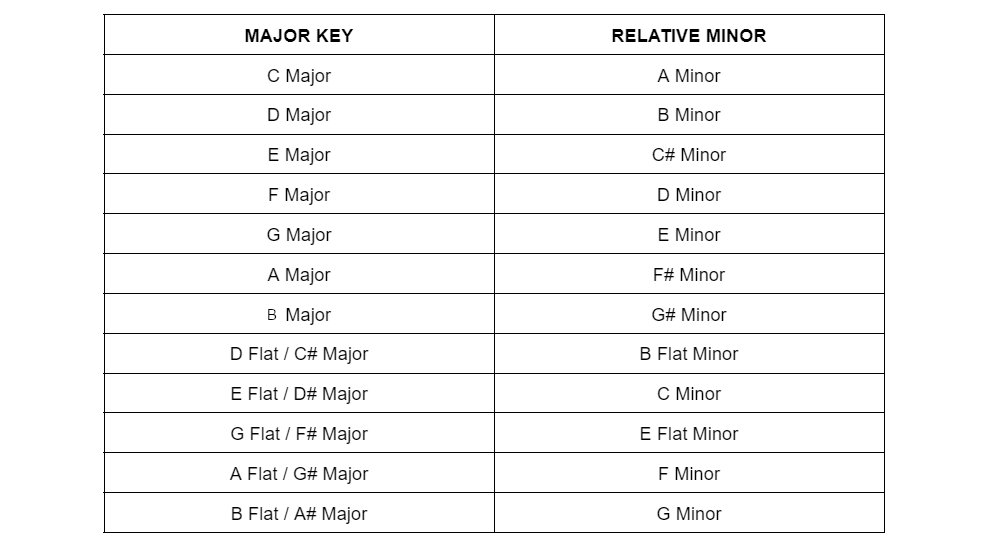
For a stalking scene? F minor was better than what I asked for.
The AI didn’t follow instructions. It found the right answer anyway.
F minor - 70 BPM - ZELLER v1Duration: 2:54 (cropped to first 1:07)
Lab note: The model designation “ZELLER v1” in Producer.ai refers to our title and version number.
8/10
Step 5 – The Tonal SFX Stack
Vocals and music bed alone weren’t quite enough for a cold open. I needed something to grab the ear in the first seconds — something that signals this is different, pay attention.
I pulled from our existing SFX library and built a tonal stack, all tuned to A flat major:
- Braams
- Hits
- Impacts
- Whooshes
These are layered — not sequential. They bloom together in the opening moment like a fist closing slowly.
9/10
Step 6 – Assembly in Kdenlive
All layers came together in the Kdenlive timeline:
- Tonal SFX stack (opening seconds)
- Producer.ai F minor orchestral bed (cropped to 1:07)
- Beatrice Florea vocal stem (31 seconds, compressed)
Output: MP3 and MP4, 1 minute 14 seconds total duration.
Before publishing anywhere, I uploaded the finished piece as an MP4 to YouTube to run it through their Content ID system — the most comprehensive copyright detection tool available to independent creators. It passed with no flags.
I then took the video down. The audio lives here now.
10/10
The Real Lesson – and What This Actually Cost
Let’s talk about the copyright strategy for a moment, because it’s worth understanding.
“Every Breath You Take” is one of the most commercially licensed songs in existence. Licensing it properly — sync rights from the publisher, master rights from the label — would run somewhere between $10,000 and $25,000 for a production like this. Possibly more. The rights holders know exactly what that song is worth, and they price accordingly. They can also simply say no.
That’s not a path for an independent production.
What I used instead: a vocal stem isolated from a cover version — not the original recording, not the original publisher’s composition in any direct commercial sense. Tested against YouTube’s Content ID. Passed clean.
Total production cost for this entire music track: under $10.
That’s the whole stack — AI generation, stem splitting, SFX, assembly. Under ten dollars.
The alchemist’s job isn’t always to design the reaction. Sometimes it’s to recognize what’s already happening — and get out of the way long enough to let it finish.
I heard 30 seconds of cello and piano. Something in me recognized a door. I walked through it.
The lyrics did the rest. The female voice did the rest. The AI generating F minor instead of A flat major did the rest.
Cupcake is watching Lissette.
And now, so are you.
Tools & Creative Stack
- Claude.ai – music prompt engineering and moderation troubleshooting
- Producer.ai – AI instrumental generation
- LALAL.AI – vocal stem separation
- Audacity – vocal compression
- ytDownloader (Linux) – YouTube audio acquisition
- Tunebat Analyzer – key and BPM verification
- Kdenlive – multitrack timeline assembly and MP3/MP4 export
- YouTube Content ID – copyright clearance testing
TL;DR: I needed a stalker’s theme. A 30-second clip of cello and piano led me to one of the most recognizable songs ever recorded. I split the vocal, built a custom AI music bed, got blocked by a content filter, rewrote the prompt, and the AI gave me the wrong key — which turned out to be the right one.
Total cost: under $10. Licensing the original would have run $10,000+.
Intuition: 1. Strategy: 0.
Steve Teare
video alchemist
TerminallyBored.Monster
Palouse, Washington USA