I didn’t plan to make a film about light.
I planned to make something smaller. Safer. Maybe a quiet “coming-of-age adjacent” reflection about a mother watching her daughter turn sixteen.
You know… normal emotional territory. Controlled burns.
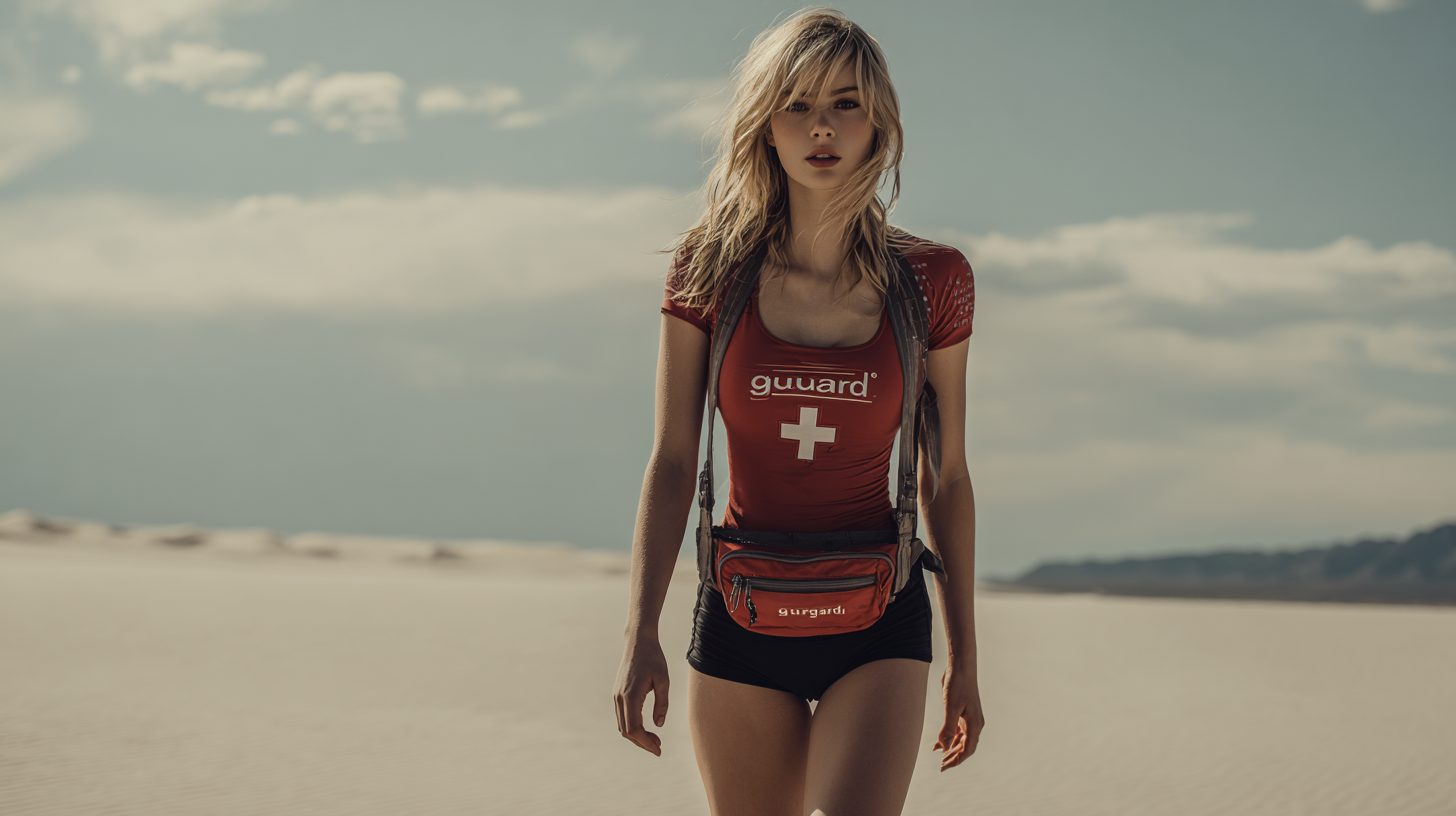
Instead, I ended up building a three-minute hallucination where suburban roads turn into philosophical instruments, and a lifeguard runs through a desert sandstorm like she’s trying to outrun meaning itself.
Somewhere in the middle of it, I realized I wasn’t editing a story anymore.
I was editing illumination.
2/9 — the seed that changed everything
The original seed was simple:
A mother reflects on sixteen years of caregiving routines.
Breakfasts before sunrise.
School drop-offs.
The repetition that quietly becomes identity.
Then the line arrived:
“If someone needed me, I knew who I was.”
Lab note: that sentence is a trapdoor. Once you step through it, you stop writing biography and start writing archetype.
That’s when the project stopped being about motherhood in a literal sense and started becoming about something more dangerous:
purpose as identity addiction.
3/9 — the decision to let light become the narrator
At some point I stopped thinking in scenes and started thinking in illumination states.
- dawn light = care
- morning light = structure
- harsh clarity = exposure
- impossible glow = transcendence
No plot. Just light changing what ordinary objects mean.
The road is still a road.
The house is still a house.
The bus stop is still a bus stop.
But the light keeps re-teaching you how to see them.
Lab note: this is where Midjourney stopped being “image generation” and started behaving like emotional physics simulation.
4/9 — the lifeguard appeared and immediately broke the film open
The lifeguard wasn’t in the plan.
She arrived the way AI artifacts usually arrive in my process: wrong, but emotionally correct.
A young female lifeguard running through a desert sandstorm.
No water.
No beach.
No rescue context.
Just motion and urgency inside an impossible environment.
At first I tried to rationalize it.
Then I stopped.
Because the real question wasn’t “why is she there?”
It was:
what happens to a rescuer when there is nothing left to rescue?
That question quietly started rewriting the entire film.
5/9 — the Landslide problem (and why it mattered)
The needle-drop was Fleetwood Mac’s “Landslide.”
One minute excerpt. Carefully chosen. Brutally familiar.
And suddenly everything became about timing:
Can the child within my heart rise above?
Can I sail through the changing ocean tides?
Can I handle the seasons of my life?
Lab note: this is where editing stopped being technical and became conversational with memory.
I started placing images not under beats, but under questions.
The lifeguard didn’t belong everywhere.
She belonged exactly where identity was being questioned but not yet resolved.
6/9 — the voice of the future mother
We built the narration as a future reflection.
Not advice. Not explanation. Not dialogue with the daughter.
Just a woman looking back at a life she didn’t fully understand while she was living it.
I remember cutting almost everything that sounded like “analysis.”
If a line explained too much, it died.
The rule became:
If the image already says it, the voice does not.
Lab note: silence is not absence here. It is respect for the visual system.
7/9 — the talking head constraint (and why 5 moments was enough)
We introduced a speaking presence only five times.
Not to narrate.
To puncture.
Each appearance had to feel like a realization arriving, not information being delivered.
- I thought something was ending.
- The doing became the answer.
- If someone needed me, I knew who I was.
- It wasn’t an ending. It was a horizon moving.
- The lighthouse was still standing.
Lab note: fewer talking heads made the film more expensive emotionally. Ironically also cheaper financially. Fewer renders, fewer voice passes, less noise in Kdenlive.
Sometimes subtraction is the only luxury tool you need.
8/9 — tools & creative stack
This was a hybrid low-cost cinematic pipeline, built like a small ritual engine:
- Midjourney (still generation, lighting experiments, symbolic drift)
- MIdbot – automation for Chrome
- Grok Imagine (image-to-motion interpretation layer)
- ElevenLabs (future-mother voice with controlled emotional restraint)
- Audacity (needle-drop slicing)
- LALAL.AI (vocal isolation and stem separation)
- Kdenlive (final assembly, timing, rhythm, silence placement)
Lab note: the real tool was not software. It was restraint under temptation to over-generate.
9/9 — what I learned (and didn’t expect)
The biggest lesson wasn’t technical.
It was this:
Light is not atmosphere. Light is perspective.
Once I stopped treating illumination as “cinematography” and started treating it as “meaning over time,” the whole film locked into place.
And the strangest part?
The lifeguard in the desert ended up being one of the clearest emotional anchors in the entire piece.
Not because she made literal sense.
But because she didn’t.
She represented the moment when purpose stops being tied to environment and starts existing as pure motion.
That’s what SIXTEEN really became:
Not a story about a daughter turning sixteen.
Not a story about a mother letting go.
But a quiet realization that:
the things we build ourselves around are often just ways of staying in motion until light changes enough for us to see differently.
And when that happens…
the lighthouse is still standing.
The light remains.
It always had.
Steve Teare
video alchemist
TerminallyBored.Monster
Palouse, Washington USA