The treasure hunt that found its own sense of humor
I started with a song that felt much too serious.
That was the problem.
The first idea was beautiful, atmospheric, wistful — all the usual things I apparently reach for when confronted with a piece of music that has any emotional depth whatsoever.
Then I looked at what I was actually making and thought, “Wait a minute. These two aren’t tragic.”
They’re having fun.
That changed everything.
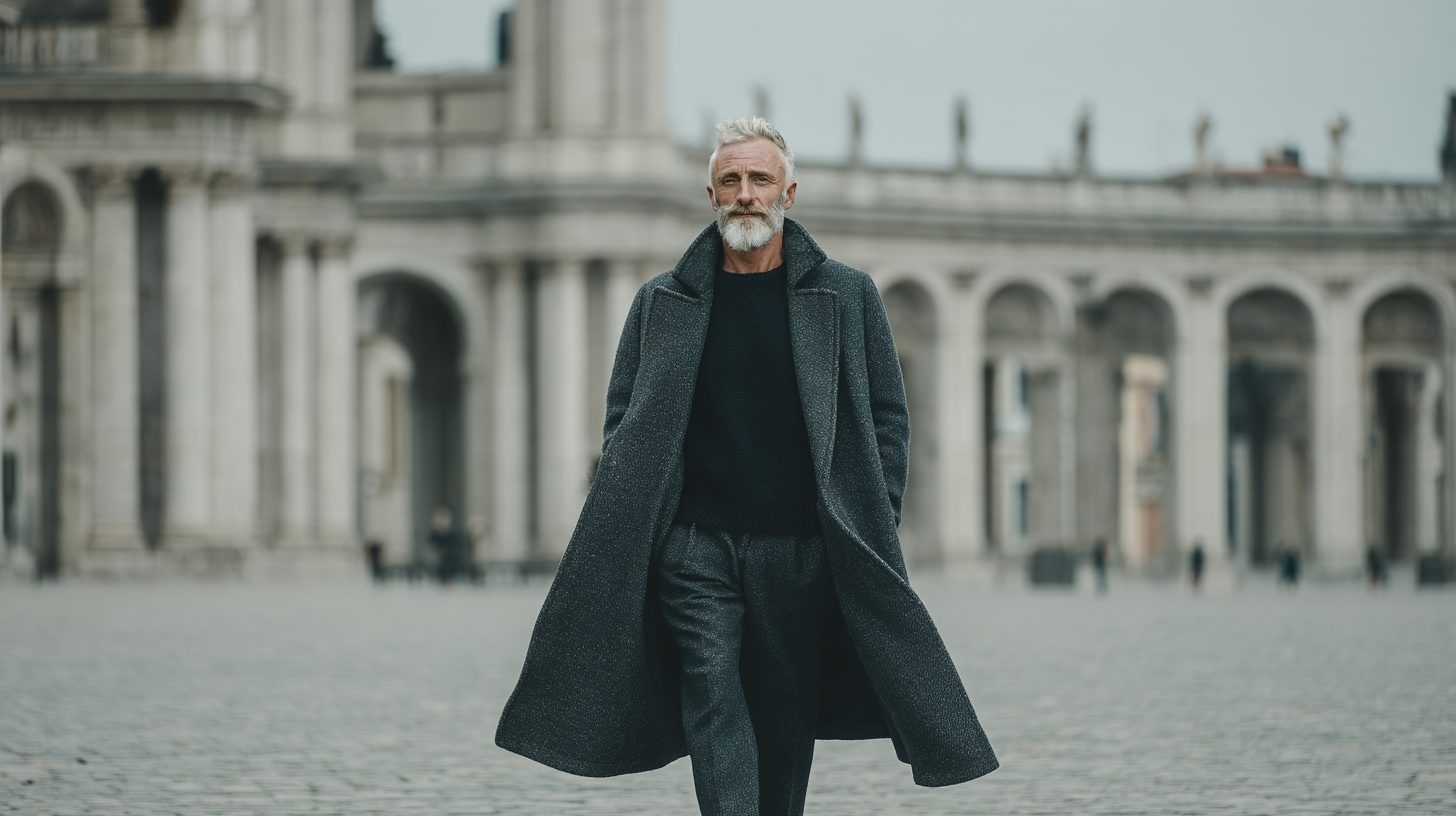
The finished piece became a little treasure hunt between two people who know each other well enough to be mischievous without having to explain the joke.
And somewhere along the way, I stopped making a music video and started making another episode in the continuing adventures of Spark & Forge.
2/9
Step 1: I threw away the hotel room.
My first visual concept was all dim rooms, rain, loneliness, soft blue light and somebody staring meaningfully into the middle distance.
It was cinematic.
It was also completely wrong.
It made the story feel like a one-night stand at a cheap motel.
That wasn’t the emotional territory I wanted at all.
I kept the thing I liked — attunement — but moved it somewhere else.
Not fantasy.
Not mystical.
Not elemental.
Not even quite realistic.
The two characters simply inhabit the same strange, beautiful world.
A world with enormous rooms, improbable staircases, quiet plazas and mysterious notes.
The world doesn’t need an explanation.
Neither do they.
Lab note: Sometimes the most useful creative decision is realizing that your first good idea is still the wrong idea.
3/9
Step 2: Turn the mystery into a game.
The breakthrough came when I thought about clue notes.
What if the story wasn’t about someone trying to understand something profound?
What if somebody had simply left a clue?
Then another.
And another.
And what if the clues became increasingly mischievous?
That gave me the basic structure:
A character discovers a note.
He follows it.
He discovers another.
He follows that.
Eventually he realizes somebody is playing with him.
And then something even better happens.
He starts playing back.
That was the point where the relationship became visible without anybody having to explain it.
The story wasn’t “Will they find each other?”
It was “How long are they going to keep this game going?”
4/9
Step 3: Let the cards do the talking.
I decided the clue cards would occupy the entire screen.
No voiceover.
No narrator explaining what the audience can already read.
Just the card, the music and five seconds to take it in.
That turned out to be remarkably liberating.
A five-second card gives the audience time to read the clue, smile at it and wonder what happens next.
Then comes a six-second motion clip.
The character acts on the clue.
Then another card.
Then another six-second piece of the hunt.
It gives the film a rhythm that is almost like turning pages in a very peculiar children’s book written for adults.
And because the cards are still images, they don’t have to be expensive little movie productions.
They can simply be beautiful.
Lab note: Still images aren’t necessarily a limitation. Sometimes removing motion forces the idea to become cleaner.
5/9
Step 4: Give the characters very little to say.
This was another important discovery.
The characters don’t need narration.
They barely need dialogue.
The man says things like:
“Hmm.”
“That’s interesting.”
“Seriously?”
“Oh, you.”
And eventually the woman starts answering him.
“You’re getting warmer.”
“No.”
“Not that way.”
“We are.”
“Maybe.”
“Took you long enough.”
That changed the whole emotional temperature.
The dialogue isn’t there to advance a complicated plot.
It’s there to reveal personality.
The woman isn’t waiting around to be discovered.
She’s running the game.
The man isn’t desperately pursuing her.
He’s enjoying being challenged.
That distinction matters.
5/9
Step 5: The glass orb
Then there was the little glass orb.
A small, perfectly clear glass sphere.
Nothing magical happens to it.
It doesn’t glow.
It doesn’t levitate.
It doesn’t contain a galaxy.
Thank goodness.
It is simply an object that becomes important because these two people have decided that it is important.
I love that.
AI has a tendency to make mysterious objects increasingly mysterious until suddenly we’re apparently standing in front of the portal to another dimension.
I resisted.
The orb is just an orb.
But because we see it in close-up, it becomes a visual motif.
Sometimes that’s enough.
Lab note: The human imagination is perfectly capable of supplying significance. I don’t have to make the pixels do all the work.
6/9
Step 6: Making two people exist in the same frame.
There was another practical problem.
Midjourney is very good at giving me an individual character.
It is considerably less reliable when I ask it to remember two different people and put both of them exactly where I want them.
So I designed the sequence to work around that problem.
For much of the hunt, the characters are separated.
We see the man searching.
We see the woman responding.
We see spaces between them.
We see clues.
We see objects.
We see architecture.
The story doesn’t require them to stand together in every shot.
In fact, the separation makes the eventual meeting better.
And when they finally do see each other, I don’t need fireworks.
They just stop.
They look at each other.
They smile.
And the game is over.
Or perhaps it isn’t.
7/9
Step 7: The motion problem
Once the still images were working, I moved them into Grok for motion.
This required a completely different kind of prompting.
For Midjourney, I have to describe the world.
For Grok, the world is already there.
The still image already contains the man, the woman, the clothing, the architecture, the lighting and the composition.
So why tell the AI all of that again?
Instead, I give Grok something much simpler:
“walking alone, slow forward tracking movement, subtle natural movement of his coat, quiet curiosity and understated anticipation, he says, ‘Hmm.’”
That’s it.
The still is the visual specification.
The Grok prompt is the performance direction.
That distinction made the workflow much cleaner.
Lab note: Once an AI has the picture, stop describing the picture. Tell it what happens next.
8/9
Step 8: The music had to catch up
Ironically, the music was initially the biggest problem.
The first musical direction supported the old version of the film — wistful, atmospheric, serious.
But the film had escaped.
It had become playful.
So the music had to escape with it.
I moved toward a whimsical cinematic instrumental sound — pizzicato strings, muted vibraphone, light percussion, warm bass and little melodic turns that feel as though the music itself is sneaking around a corner.
Not cartoon comedy.
Not slapstick.
Not “here comes the funny part.”
Just a little mischief underneath the warmth.
That turned out to be the missing ingredient.
The music now feels like it knows something the audience hasn’t figured out yet.
That’s exactly what I wanted.
9/9
The real lesson
This project reminded me of something I keep forgetting.
I don’t actually know what a video is going to be when I start making it.
I know what I think it is going to be.
Those are different things.
The first concept was solemn.
The second was too mystical.
The next was too fantastical.
Then came the treasure hunt.
Then the clue cards.
Then the glass orb.
Then the little exchanges between the characters.
Then the music finally caught up.
The finished piece emerged through a series of corrections.
That’s the part of AI creativity I find most interesting.
I’m not sitting at a desk issuing commands to a machine and receiving finished art.
I’m improvising with a collection of machines that are all slightly unpredictable.
Midjourney gives me an image I didn’t quite expect.
Grok gives a still image a gesture I hadn’t imagined.
A piece of music changes the emotional meaning of a scene.
A limitation becomes a structural device.
A failed idea points toward a better one.
And occasionally the whole thing clicks.
That’s the happy accident I’m always looking for.
The result is a tiny story about two people who apparently have nothing better to do than leave clues for each other.
Honestly, I approve.
And perhaps that’s the real trick.
Don’t force the AI to make your original idea work.
Listen when the project starts telling you what it actually wants to become.
TL;DR: I tried to make a serious music video. The characters apparently had other plans.
Steve Teare
video alchemist
TerminallyBored.Monster
Palouse, Washington USA