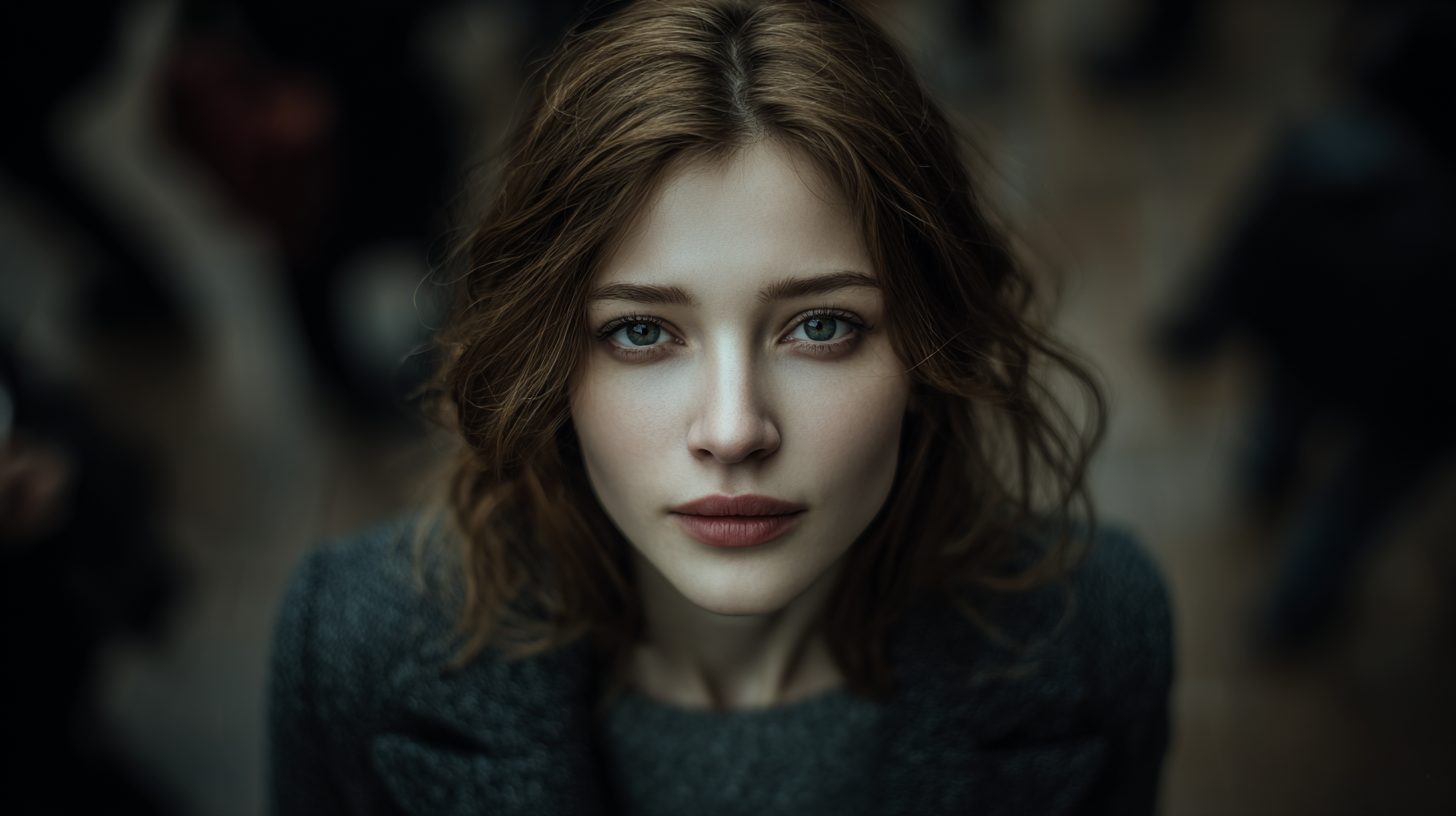
Sometimes the loneliest place in the world is a crowded room.
Not because nobody loves you. Not because nobody is there.
Sometimes it is simply because there is so much noise that you can’t hear yourself anymore.
That was the little idea that started this video.
I wanted to make something about solitude that wasn’t really about sadness. Something about the strange experience of being surrounded by people while living in a private interior world that nobody else can quite enter.
And, naturally, I decided the best way to explore that feeling was to slow down a Coldplay song and throw several artificial intelligences at it.
Because apparently that’s how I process things now.
2/9
The song was Yellow.
I started with the instrumental backing track and slowed it down from its original 87 BPM to roughly 68 BPM using Audacity’s Tempo feature.
I deliberately preserved the pitch.
I didn’t want a gloomy, artificially lowered version of the song. I wanted the music to breathe.
At 68 BPM, Yellow became less like a conventional pop song and more like something remembered.
That mattered.
The narration needed room around it.
Lab note:
Slowing music isn’t merely a technical adjustment. Tempo changes emotional geography.
The same chord progression that feels like a song at 87 BPM can feel like a memory at 68.
3/9
The next problem was figuring out what the woman was actually thinking.
I didn’t want to make a video about a fictional woman who was simply miserable.
I wanted someone strong.
Someone capable.
Someone who could be surrounded by people, responsibilities and expectations and still occasionally need to disappear into silence.
So I worked with ChatGPT to develop a first-person interior monologue.
The central idea became:
I can miss someone without reaching for them.
I can love someone without needing anything from them.
I can think about someone…
and still leave them completely alone.
That became important to me.
Silence doesn’t always mean rejection.
Sometimes silence is where a person goes to find herself again.
4/9
Once I had the narration, I broke it into visual beats.
Then came the shot list.
But there was an important technical constraint hiding inside the next step.
Grok Imagine was generating approximately six-second image-to-video clips with audio, so I needed to work within a roughly 12-word narration block for each clip.
That meant the narration couldn’t simply be one beautiful paragraph.
It had to be engineered for the edit.
Every approximately 12-word block had to carry enough meaning to stand on its own while also flowing naturally into the next block.
That changed how I wrote.
A sentence became a shot.
A pause became a transition.
A phrase became six seconds of visual breathing room.
The visual journey was deliberately simple:
- Crowded
- Isolated
- Inward
- Peaceful
Lab note:
One of the strangest parts of AI filmmaking is discovering that a technical limitation can become a writing tool.
The six-second / approximately 12-word constraint forced me to stop writing only for the page and start writing for time.
5/9
For the imagery, I used Midjourney to build a consistent fictional character.
That required a little more discipline than I usually give myself.
Every prompt had to repeat her physical description because Midjourney doesn’t care that I introduced her six shots ago.
She is a 44-year-old Caucasian woman with shoulder-length dark chestnut-brown hair, hazel-green eyes, fair skin and an understated, elegant appearance.
Her clothing changes with the emotional movement of the story, but remains restrained — charcoal, gray, cream, beige and muted earth tones.
The visual style stays grounded in contemporary indie cinema.
Naturalistic.
Cinematic.
Human.
No glowing cybernetic women floating through space this time.
I know.
I may be recovering.
6/9
Then I moved the still images into Grok Imagine.
This is where the photographs stopped being photographs.
I used image-to-video with audio, feeding the narration into the process in approximately 12-word blocks for each six-second clip.
That constraint became part of the creative workflow rather than just a technical annoyance.
Each clip needed:
- Approximately 12 spoken words
- Approximately six seconds of screen time
- One clear visual idea
- A natural handoff into the next clip
The AI wasn’t just animating pictures.
It was helping me discover the rhythm of the narration.
A woman pauses.
A phone waits.
A crowd moves.
A reflection appears.
A hand lets go.
A face looks toward the sky.
Six seconds isn’t very long.
But emotionally, six seconds can be enormous.
7/9
The voice was another experiment.
I didn’t want a conventional narrator.
I wanted a fictional female voice that sounded intelligent, warm, restrained and quietly powerful.
Not sad.
Not seductive.
Not “movie trailer woman.”
And definitely not somebody announcing the end of civilization.
I wrote a custom ElevenLabs voice-design prompt describing a woman in her early-to-mid 40s with a warm, intelligent presence, subtle emotional restraint, natural American English and a slightly husky lower-mid register.
The key instruction was emotional restraint.
I wanted her to sound like she was thinking rather than performing.
The narration was then shaped to the same approximately 12-word / six-second rhythm used for the Grok clips.
That synchronization mattered.
The words weren’t simply sitting on top of the images.
The images were being built around the words.
8/9
Finally, everything came together in Kdenlive.
The workflow looked like this:
LALAL.AI
→ stem splitter
Audacity
→ slow Yellow from 87 BPM to approximately 68 BPM
ChatGPT
→ first-person narration
ChatGPT
→ shot list
ChatGPT
→ Midjourney image prompts
Midjourney
→ cinematic stills
Grok Imagine
→ image-to-video with audio
→ approximately 12 narration words per six-second clip
ElevenLabs Voice Changer
→ custom fictional voice
Kdenlive
→ final edit
It is a ridiculous number of tools to make one little video.
But that’s the fun of it.
I don’t think of these systems as replacements for the creative process.
I think of them as instruments.
I decide what I want to say.
The machines help me discover what it might look like, sound like and feel like.
Then I keep the parts that surprise me.
That’s the alchemy.
9/9
The real lesson wasn’t about loneliness.
It was about permission.
Permission to be quiet.
Permission to step away.
Permission to love someone without demanding their attention.
Permission to be alone without assuming something is wrong.
And maybe, most importantly, permission to let another person have their own silence.
I don’t know what anybody else is thinking when they disappear for a while.
Neither do you.
That’s probably a good thing.
Sometimes the most loving thing we can do is resist the urge to fill the silence with our own story.
So this video isn’t really about a woman who is lonely.
It’s about a woman who is listening for her own voice.
And maybe that’s something all of us need occasionally.
Especially those of us who spend our days surrounded by other people’s voices.
TL;DR:
Crowds can be lonely.
Silence can be healing.
And sometimes slowing a song down by 19 BPM is enough to discover that it was hiding a completely different feeling.
The machines supplied the pixels.
I supplied the intention.
The six-second clips supplied the rhythm.
And the approximately 12-word constraint turned out not to be a limitation at all.
It became part of the writing.
Somewhere between all of that, something human happened.
Steve Teare
video alchemist
TerminallyBored.Monster
Palouse, Washington USA